
Healthcare sharing ministries have become a popular alternative for individuals and families looking for a different way to manage medical costs. But not every organization that shares medical expenses operates the same way.
Zion HealthShare is often compared to healthcare sharing ministries, but it does not operate under that legal classification. Instead, it offers a modern, accessible membership built on transparency, affordability, and shared responsibility.
Understanding the difference is key. While traditional ministries follow specific legal and religious frameworks, Zion HealthShare has chosen to build a welcoming community design for flexibility and everyday practicality.
What Are Healthcare Sharing Ministries (HCSMs)?
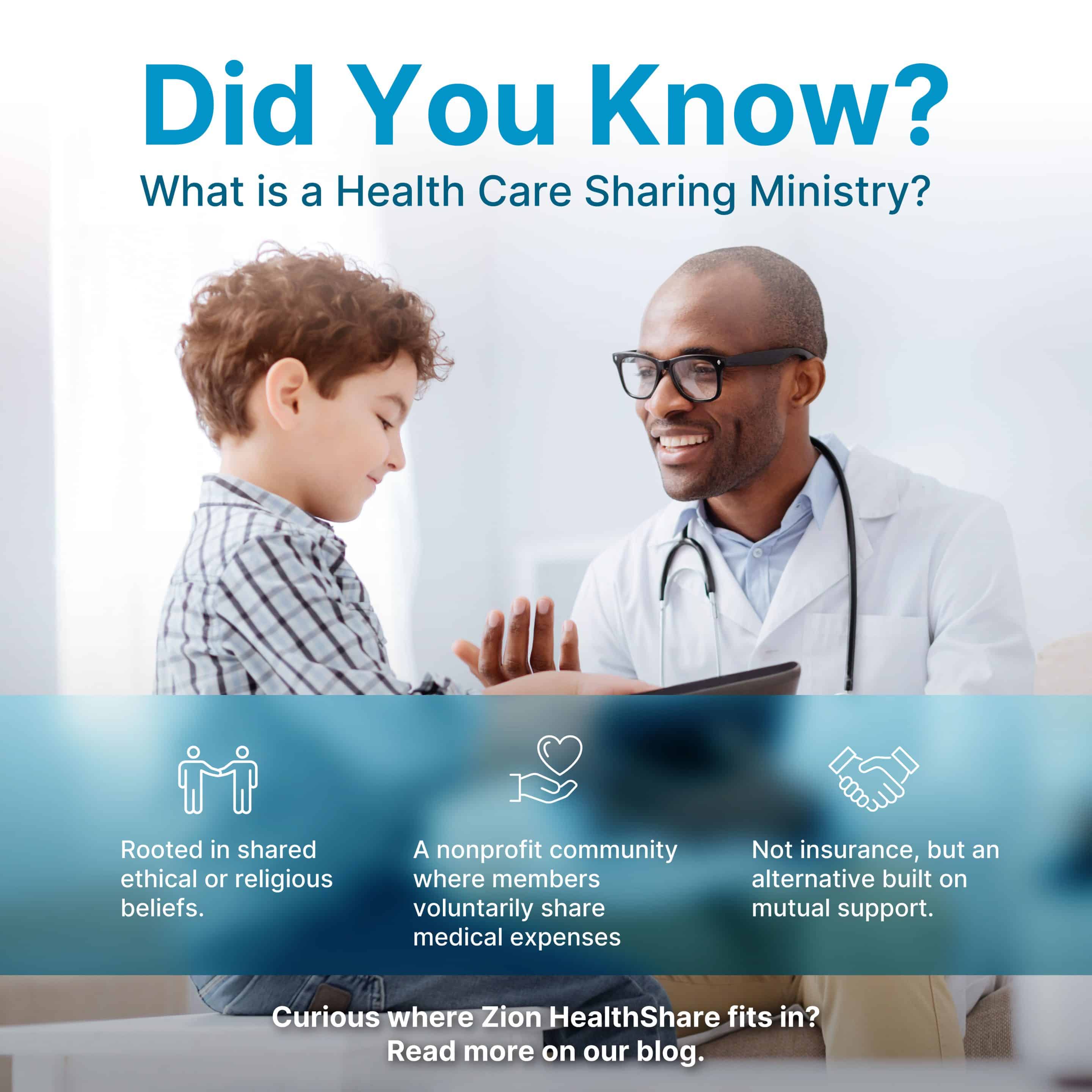
Healthcare sharing ministries (HCSMs) are nonprofit organizations where members contribute monthly to help share one another’s eligible medical expenses. These ministries are rooted in shared ethical or religious beliefs, with origins tracing back to mutual aid practices within communities like the Amish and Mennonites in the early 1900s with modern forms emerging in the 1980s according to Philanthropy Roundtable.
They are not insurance companies and are not regulated as insurance. Instead of purchasing a policy, members voluntarily participate in a structured community that shares costs according to established member guidelines.
Legal Classification Under the ACA
Under the Affordable Care Act (ACA), HCSMs are a specific legal category that are not treated the same as health insurance. To qualify for this designation, organizations must meet several defined criteria:
- Maintain 501(c)(3) nonprofit status
- Facilitate sharing among members with common ethical or religious beliefs
- Have been in continuous operation since December 31, 1999
This final requirement is what separates newer organizations from those that fall within the ACA’s formal HCSM classification.
Zion HealthShare meets the core functional characteristics of a healthshare. It operates as a nonprofit, facilitates voluntary sharing among members, and is built on shared ethical principles. However, because it was established after December 31, 1999, it is not classified as a healthcare sharing ministry under the ACA.
That distinction is legal, not operational.
In practice, Zion HealthShare follows the same foundational model that defines healthshares:
- Members contribute monthly to help share eligible medical expenses
- Participation is voluntary and community-driven
- Guidelines outline how sharing works and what is eligible
- Members take on a defined personal responsibility amount before sharing begins
The term “ministry” itself reflects the historical and legal framework tied to the ACA, when most existing healthshares were faith-based organizations. Today, that label defines a regulatory category, not the full range of how modern healthshare communities operate.
Why the Term “Ministry” Exists
The term “ministry” is a legal classification that allows healthcare sharing organizations to operate separately from health insurance regulations. It originated with early Christian-based healthshares, but today it defines legal structure rather than how each community functions.
Understanding the Faith-Based Requirement
The legal requirement for healthshares to be faith-based is a foundational aspect of their existence and operation. This stipulation allows them to operate outside of the stringent regulations imposed on health insurance companies. While all healthshares must fulfill this faith-based requirement, their interpretation and application vary widely.
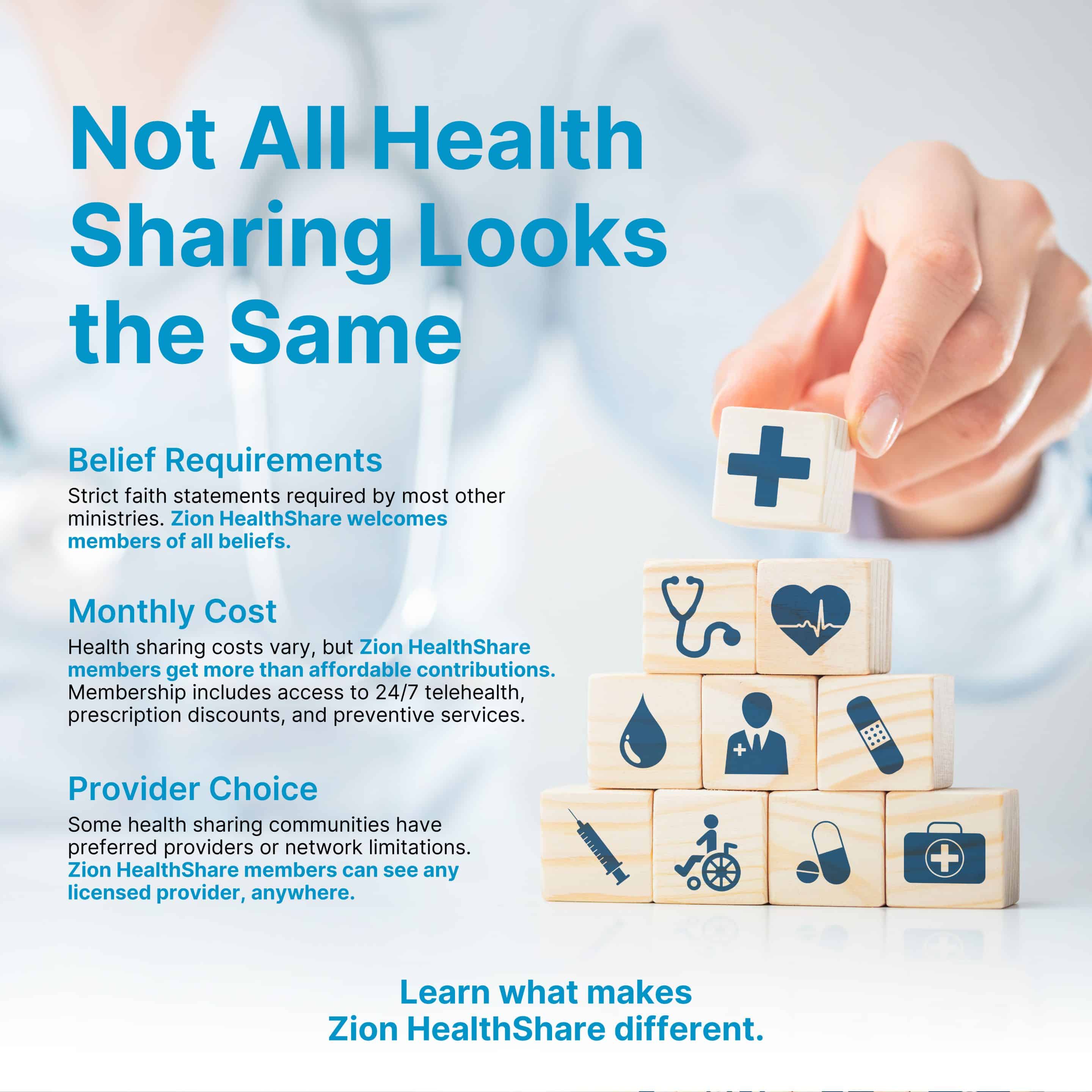
Some healthshares demand a specific statement of faith, regular church attendance, and adherence to conservative Christian lifestyles. Others, like Zion HealthShare, adopt a more inclusive approach, focusing on broader ethical principles and a belief in a higher power without defining its nature. Common misconceptions often arise, leading people to believe all healthshares require strict religious adherence, which is not always the case.
The Zion HealthShare Difference
Zion HealthShare distinguishes itself with a modern and inclusive approach to medical cost sharing. While legally classified as a healthcare sharing ministry, Zion HealthShare interprets the faith-based requirement broadly: members need only accept the concept of a higher power without specific religious affiliation or definition.
This inclusive stance means that individuals from all walks of life, regardless of their specific beliefs or backgrounds, can find a home within the Zion HealthShare community.
In an era of rising healthcare costs, Zion HealthShare offers a compelling alternative. Monthly contributions are often significantly more affordable than health insurance premiums.
For instance, health sharing typically costs about half of unsubsidized health insurance. This cost efficiency, combined with flexibility in provider choice, makes Zion HealthShare an attractive option. Members are not restricted by narrow networks, allowing them to choose any doctor or hospital that best suits their needs.
This freedom is a stark contrast to the increasing network restrictions seen in health insurance plans, where commercial insurers’ vertical integration means fewer choices and narrower networks as noted by the American Hospital Association.
Healthcare Sharing Ministries vs Zion HealthShare vs Health Insurance
This comparison highlights the key differences between traditional healthcare sharing ministries, Zion HealthShare, and conventional health insurance across factors like cost, flexibility, and requirements.
Who Benefits Most from Zion HealthShare
Zion HealthShare is an ideal solution for a diverse range of individuals and groups seeking a flexible, affordable, and community-oriented approach to healthcare. Individuals and families frustrated with the high costs and restrictive nature of health insurance often find great value in Zion HealthShare. With average Marketplace plans rising sharply, Zion HealthShare offers a cost-effective alternative.
Self-employed individuals and small businesses are particularly well-suited for Zion HealthShare. Small business health insurance premiums are projected to rise by a median of 11% in 2026, making affordable alternatives critical.
Membership with Zion HealthShare provides a predictable and lower monthly cost solution, helping these groups manage their healthcare expenses without the burden of insurance premiums or restrictive employer plans. Many small business owners are concerned about affordability, with 84% worried about the expiration of ACA tax credits.
Zion HealthShare also serves those who value freedom of choice in their healthcare providers. This flexibility is appealing to individuals who want more control over their medical decisions and access to their preferred practitioners.
While Zion HealthShare offers broad sharing for eligible expenses, those with specific, complex, or pre-membership conditions should carefully review the member guidelines to ensure it aligns with their needs. However, for generally healthy individuals and families looking for transparent, community-driven cost-sharing that is more than just an alternative to insurance, Zion HealthShare presents a compelling and empowering option.
Real-World Impact: Cost Savings and Member Experience
Zion HealthShare’s model delivers tangible benefits in terms of cost savings and an enhanced member experience. Many members report significant reductions in their monthly healthcare expenses compared to traditional insurance premiums. This affordability is a key driver for Zion HealthShare’s growth, which has reached over 75,000 members in seven years.
Members maintain control over their healthcare decisions, a crucial aspect often lost in health insurance systems. With no network restrictions, individuals are free to choose their preferred doctors and hospitals without fear of out-of-network penalties. This autonomy fosters a more personalized and empowering healthcare journey.
The sharing request process with Zion HealthShare is designed for simplicity and transparency. Members submit their medical bills, and once the Initial Unshareable Amount (IUA) is met and eligibility is confirmed, the community shares the remaining eligible costs.
The focus on community and mutual support creates a reassuring environment where members feel valued and cared for, contributing to the growing shift away from health insurance.
Making the Right Choice for Your Healthcare
Choosing the right healthcare solution is a deeply personal decision, influenced by factors ranging from cost to flexibility and personal values. Healthcare sharing ministries have emerged as a significant alternative, with the Alliance of Health Care Sharing Ministries (AHCSM) estimating 1.5 million participants, a nine-fold increase since 2014 according to Beckers Payer.
Among these, Zion HealthShare offers a distinct and modern approach that prioritizes inclusivity, transparency, and member empowerment. By understanding the key differences between Zion HealthShare and traditional ministries, as well as conventional insurance, you can better assess if this community-driven model aligns with your needs.
Ready to explore a different way to manage healthcare costs? Learn how the Zion HealthShare community shares medical expenses and see if membership is the right fit for you.
Frequently Asked Questions
-
How much does Zion HealthShare cost compared to health insurance?
Zion HealthShare's monthly contributions are generally lower than unsubsidized health insurance premiums. Healthcare sharing often costs significantly less than subsidized and unsubsidized health insurance. Zion HealthShare's Initial Unshareable Amount (IUA) is often more manageable than the thousands of dollars in deductibles common with health insurance plans. -
Do I have to be religious to join Zion HealthShare?
No, you do not need to adhere to a specific religion to join Zion HealthShare. Members only need to accept the concept of a higher power without defining it. This inclusive interpretation allows people of all beliefs and backgrounds to become members, a key differentiator from many traditional Christian ministries that require specific faith statements or church attendance. -
Can I use any doctor or hospital with Zion HealthShare?
Yes, with Zion HealthShare, members have the freedom to choose any licensed doctor, hospital, or specialist. There are no network restrictions, allowing members to receive care from their preferred healthcare professionals. -
What medical expenses are eligible for sharing with Zion HealthShare?
Zion HealthShare's Member Guidelines outline which medical expenses are eligible for sharing. These typically include hospitalizations, surgeries, doctor visits, some diagnostic tests, and emergency care. Some services, such as routine dental or vision care, are not eligible for sharing.
Current as of: May 2, 2026
Zion HealthShare is not an insurance company. Neither this publication nor membership in Zion HealthShare are offered by an insurance company. Visit zionhealthshare.org to view your state-specific notice.