
As 2026 begins, many Americans are re-evaluating their healthcare options. Enhanced Affordable Care Act subsidies that helped keep insurance premiums lower expired at the end of 2025, and the result for many households is sharply higher insurance costs this year. That reality has pushed more people to look beyond health insurance and ask practical questions about alternatives.
One of the most common questions people ask is, “Can I join a HealthShare anytime, or do I have to wait for open enrollment?” It is a fair question, especially if you are used to insurance rules that revolve around strict enrollment windows and limited opportunities to make changes.
The short answer is that most healthshares allow people to enroll at any time. Unlike health insurance, enrollment is not limited to a once-a-year open enrollment window.
Why Year Round Enrollment Matters in 2026
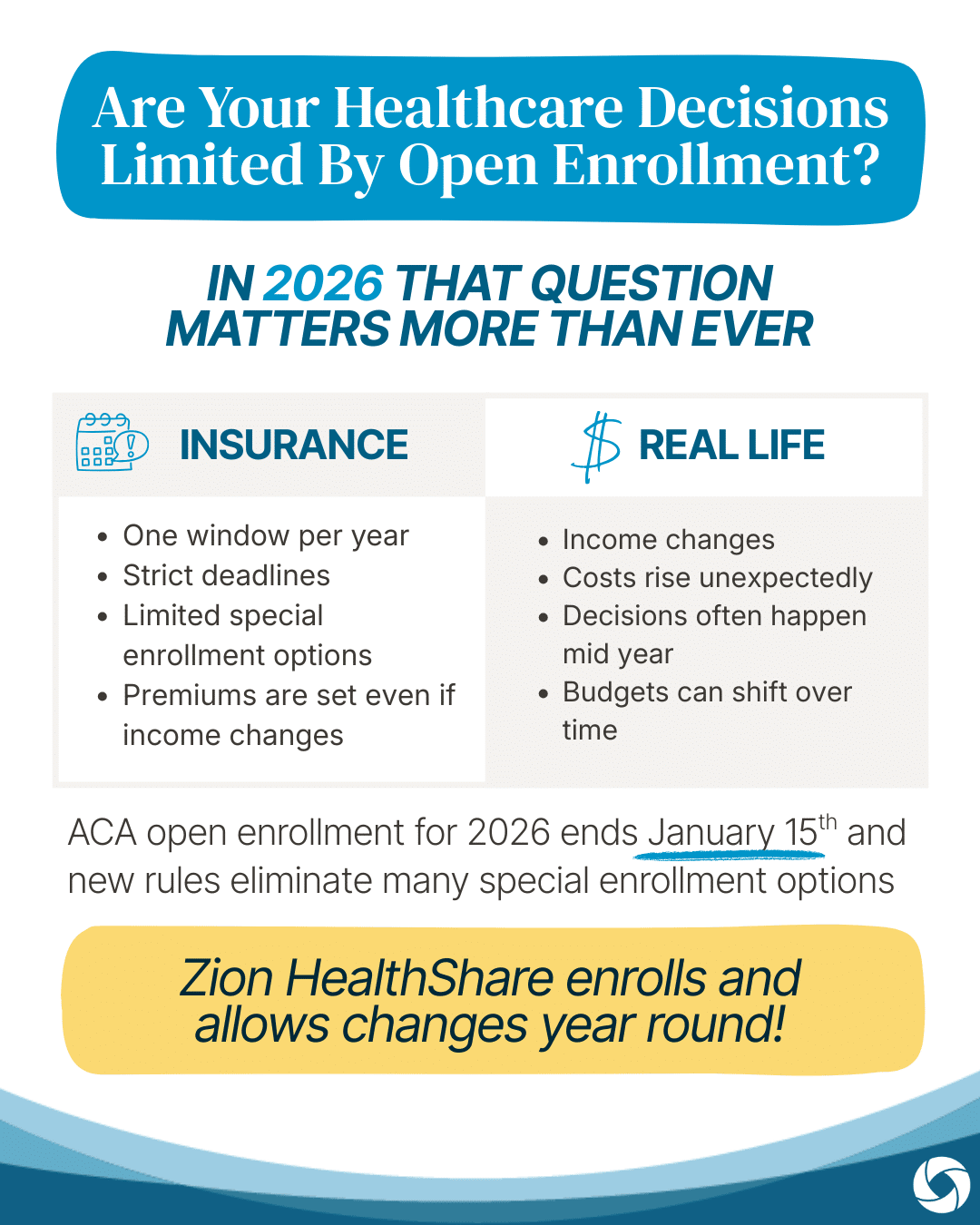
For many Americans, the timing of healthcare decisions is more complicated than ever. The ACA Marketplace open enrollment period for 2026 coverage ends January 15, 2026, in most states. Missing that deadline often means waiting until the next enrollment period unless you experience a qualifying life event, such as losing coverage, moving, or a change in household size.
In recent years, there was one notable exception. Individuals with incomes at or below 150 percent of the federal poverty level were allowed to enroll throughout the year through what was known as the low-income special enrollment period. That option gave some people flexibility beyond the standard enrollment window.
That flexibility is going away. Beginning August 25, 2025, low income alone will no longer qualify someone for a special enrollment period. While the rule is technically set to expire at the end of 2026, a separate federal law taking effect in 2026 effectively ends the low-income special enrollment period on a permanent basis. As a result, far fewer people will have access to year-round marketplace enrollment moving forward.
Rising Premiums & Timing Challenges Push People to Alternatives
Timing is only part of the issue. Affordability plays an equally important role. Some have delayed enrolling because the cost felt out of reach, while others enrolled and are now reassessing whether those premiums are sustainable long term.
This is where anytime enrollment becomes meaningful. Healthshares operate outside ACA insurance rules. They are nonprofit, membership-based programs where members voluntarily share eligible medical expenses. Because they are not insurance, healthshares are not bound by government enrollment calendars.
That structure allows people to explore and apply for membership at any point during the year. Whether someone missed open enrollment, chose not to enroll due to cost concerns, or is simply reconsidering their options, a healthshare offers flexibility that does not depend on a specific deadline.
Anytime enrollment is not just about fixing a missed window. It is about giving people room to make thoughtful healthcare decisions when their finances, circumstances, and priorities align, rather than when a calendar dictates.
ACA Open Enrollment Rules Fail Americans
Open enrollment exists to bring order to the health insurance system. By limiting when people can enroll, insurers reduce uncertainty and manage participation. But what works on paper often breaks down in real life, especially when healthcare costs rise quickly.
For many Americans, healthcare decisions are closely tied to income stability. When premiums increase, households pause. They compare options. They wait to see whether costs settle or finances improve. That instinct is rational, but the insurance system does not accommodate it. Open enrollment does not adjust to hesitation, uncertainty, or changing budgets.
As a result, people are often forced into one of two positions. They either commit to costs they are unsure they can sustain, or they delay entirely and risk being locked out until the next enrollment period. Neither option reflects how people actually make financial decisions, particularly during periods of economic pressure.
This problem has become more visible as work patterns shift. More people are self-employed, contract-based, or running small businesses. Income is less predictable than it once was, yet enrollment rules remain fixed. When access is controlled by a calendar instead of circumstances, participation becomes harder, not easier.
Why Policy Changes Have Not Fixed Enrollment Problems
Lawmakers and regulators have acknowledged these challenges. Over time, open enrollment periods have been adjusted, special enrollment opportunities expanded, and eligibility rules revisited. These changes can help at the margins, but they do not address the underlying structure.
Even with extensions or exceptions, enrollment remains tied to regulatory timelines. People must still act within defined windows or meet specific criteria to qualify. For those who are simply trying to make a careful, affordable decision, those constraints remain a barrier.
In years like 2026, when many households are reassessing costs due to higher premiums, that rigidity becomes more pronounced. The issue is not confusion about deadlines. It is the lack of flexibility to decide when participation makes financial sense.
How Healthshares Allow Year Round Enrollment
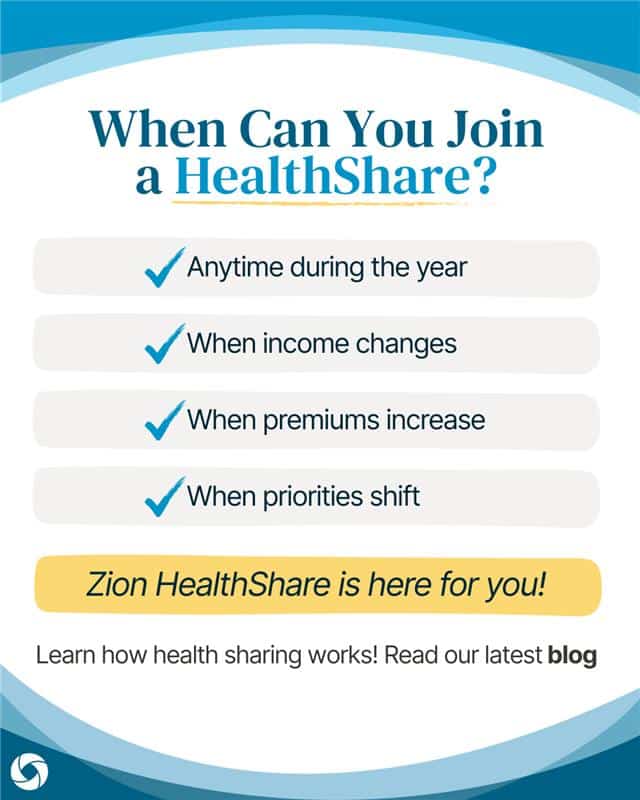
Healthshare enrollment is not tied to government enrollment calendars. Membership applications are accepted year round, which means people are not required to make decisions during a short, once-a-year window. This flexibility exists because of how healthshares are structured, not because of special enrollment exceptions or temporary rules.
Lower and more stable monthly membership contributions also reduce the pressure to reevaluate or change options each year, giving people more consistency than health insurance where costs can fluctuate significantly year to year.
Instead of requiring people to predict their financial stability months in advance, healthshares allow decisions to happen in real time. People can explore membership when costs change, income shifts, or priorities evolve, without waiting for permission from a calendar.
This structure does not eliminate responsibility or guidelines. It simply removes timing as a barrier. Enrollment is not tied to qualifying events or government-defined timelines, allowing people to make decisions based on their circumstances rather than regulatory requirements.
Why Zion HealthShare is the Ideal Choice for Year Round Flexibility
Zion HealthShare follows this year-round enrollment structure, allowing individuals, families, and businesses to join when it aligns with their circumstances. There is no open enrollment period and no requirement to tie decisions to an annual cycle.
The member guidelines are clearly outlined, so people understand how sharing works before they join. This transparency allows for thoughtful evaluation rather than rushed decisions driven by deadlines.
Zion HealthShare also has zero network restrictions, giving members freedom to choose providers without navigating enrollment-based limitations. Combined with the ability to join or leave without long term contracts, this creates flexibility that mirrors how people actually live and work.
Rather than positioning enrollment as a limited opportunity, Zion HealthShare treats it as an ongoing option. That distinction matters in a year when many Americans are reassessing healthcare costs and timing simultaneously.
Ready to Explore Healthshare Options in 2026?
Don’t let another missed deadline or skyrocketing premium lock you into unsustainable coverage. In 2026, flexibility is more valuable than ever.
With Zion HealthShare’s year-round enrollment, zero network restrictions, and transparent member guidelines, you can make healthcare decisions on your terms, when the timing makes sense for you. Ready to explore a better way? Visit Zion HealthShare to learn how health sharing works and join a healthshare that shares more than just costs, it also shares peace of mind.
Current as of: March 11, 2026
Zion HealthShare is not an insurance company. Neither this publication nor membership in Zion HealthShare are offered by an insurance company. Visit zionhealthshare.org to view your state-specific notice.