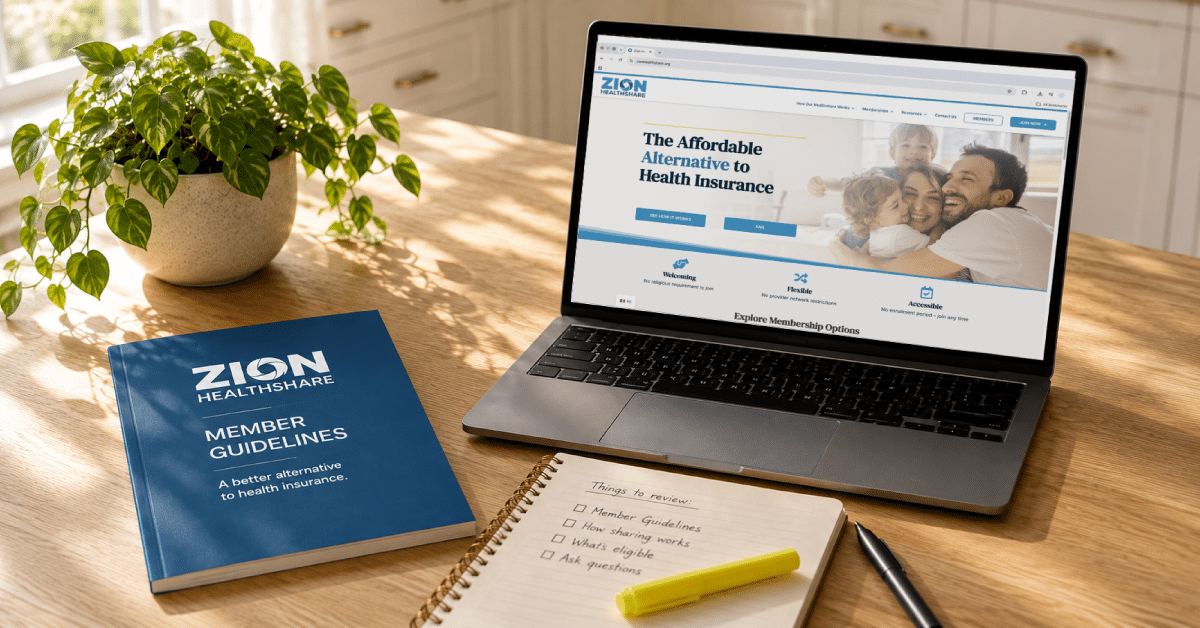
Knowledge is power, especially when it comes to looking after our health. Thanks to the internet and social media, we now know more about health conditions, and what happens if we develop them, than ever before. But with healthcare often being expensive, hard to navigate and often inflexible and impersonal, many Americans are seeking alternative reassurance that they can access high quality healthcare, without insurance.
Health sharing memberships are another way to achieve healthcare flexibility and confidence when managing healthcare expenses. But is a health insurance alternative right for you? Let’s find out.
What is Zion HealthShare?
Zion HealthShare offers a modern, accessible membership program that is built on transparency, affordability, and shared responsibility. The Zion HealthShare model is medical cost sharing where people contribute monthly to help pay one another’s eligible medical bills. Unlike health insurance, requests for medical care are approved based on pre-agreed community guidelines. And there are no tie-ins to specific providers, giving members the flexibility to choose the care that best suits their needs.
So, who can benefit from health sharing?
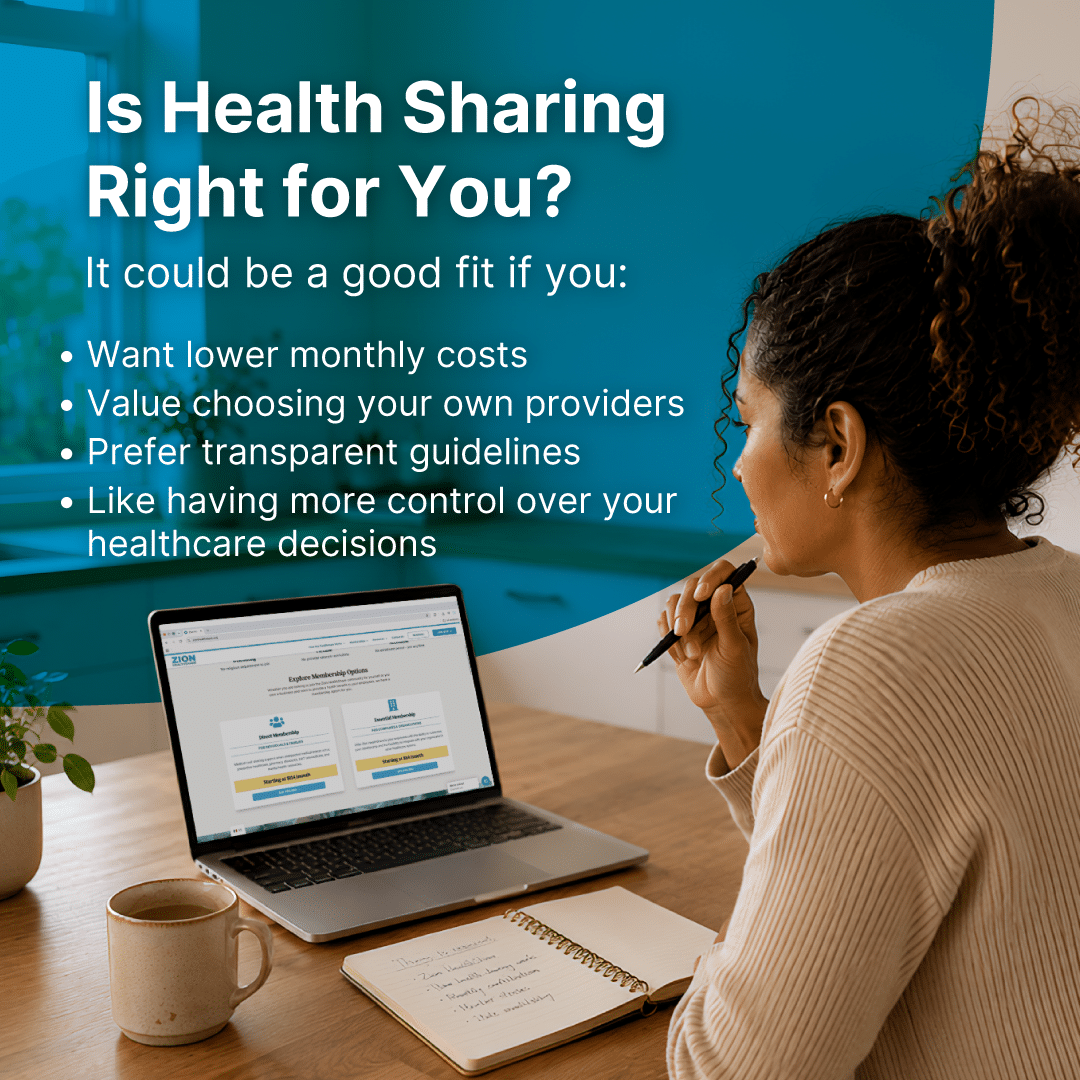
Individuals and Families Seeking Healthcare Affordability
For many individuals and families, healthcare affordability is often the biggest barrier to healthcare. With global economic instability meaning that money doesn’t stretch as far as it used to, costly health insurance premiums can feel like a burden.
Health sharing typically offers lower monthly contributions than health insurance, which can help to reduce the pressure of costly premiums and put more money back in your pocket for the other things in life that matter to you.
People Who Value Provider Choice
We know how important it is to feel in control of your healthcare. With health sharing, you can say goodbye to inflexible network restrictions and instead, choose a doctor, specialist or hospital that best fits your needs.
This freedom can make it easier to find a provider you trust, compare options, and pick care that feels right for both your health and your budget. For people exploring health sharing for the first time, this flexibility is often one of the biggest benefits because it puts more choice back in your hands.
Self-Employed Professionals and Entrepreneurs
For business owners with unpredictable income, health sharing can provide predictable monthly costs and simpler, more transparent budgeting without the complexity of subsidies or employer-coverage requirements. You can also enjoy the freedom to choose trusted doctors and care options that fit your needs and enroll anytime you like.
One of the biggest financial advantages available to eligible individuals, including entrepreneurs and self-employed professionals, is the ability to take advantage of the tax benefits of a Health Savings Account (HSA), but standard health sharing plans don’t automatically qualify you to contribute to one. While you can’t contribute to an HSA with only a health sharing plan in place, you can pair an HSA-qualified high-deductible health plan (HDHP) with your health sharing membership. This combination can satisfy the HSA eligibility requirements, allowing you to open and contribute to an HSA with pre-tax dollars.
You can then pay for qualified medical expenses using those tax-free HSA funds, effectively lowering your taxable income while helping to pay for your care. For self-employed people, this means you can get the best of both worlds: the lower monthly costs and provider flexibility of health sharing plus the powerful tax advantages of an HSA.
Small Businesses Looking for Flexible Benefits
Health sharing memberships offer small businesses a powerful way to provide employee benefits while controlling costs. The core benefits include significant cost savings (typically 20–50% less than group health insurance), predictable monthly expenses that simplify budgeting, and flexibility to offer to employees throughout the year, without being limited to an annual open enrollment period. Businesses also gain provider freedom for their employees, who can choose their own doctors without network restrictions. And as we know, health sharing memberships can be paired with Health Savings Accounts (HSAs), an attractive proposition for eligible employees who can make tax-advantaged contributions, while employers may also make tax advantaged contributions to their employees’ HSAs.
Households Interested in Pairing Health Sharing with DPC
Many people choose to combine health sharing with Direct Primary Care (DPC) for their routine healthcare needs. This model provides reassurance that day-to-day healthcare costs like check-ups, labs and prescriptions can be covered by your DPC, while your healthshare will share any major eligible expenses that occur, like ER visits, surgeries and hospital stays.
Why Transparency Matters
Because health sharing works differently from health insurance, it’s important for people to make informed decisions about their healthcare. That’s why our model is based on a fundamental principle of transparency, with clear pricing, operational practices and sharing eligibility. This helps our members compare costs between providers, understand which medical expenses are eligible for sharing, and have a clear understanding of when and how they can join a medical cost sharing community.
Reviewing the Member Guidelines Before Joining
Healthshares all have specific membership requirements. Known as member guidelines, they are the rules that you agree to follow when you join. They also help determine if your medical expenses are eligible for sharing. Each healthshare membership has its own member guidelines. These typically include agreeing to rules around:
- Defining pre-membership medical conditions, and any applicable sharing limitations
- Waiting periods that may apply to certain services or medical conditions
- Initial Unshareable Amount (IUA) which is the amount a member is responsible for before the community shares the rest of the eligible expenses
- Any lifestyle and health requirements, such as guidelines related to tobacco use
- Documentation/evidence submission
- Commitment to monthly contribution amounts
Since all member guidelines vary by healthshare, it’s essential to review them carefully before you enroll. If you’re interested in becoming part of the Zion HealthShare community, you can review our member guidelines here.

Frequently Asked Questions
-
What is health sharing?
Health sharing is a membership based arrangement where people contribute towards eligible medical costs of others within the group. -
How does health sharing work?
Members pay a regular monthly amount to maintain membership within the community. The community then shares eligible medical expenses should the need arise. -
How does health sharing compare to health insurance?
Health sharing isn’t the same as insurance and does not operate in the same way.
See our table below for a more comprehensive comparison.
-
Who is health sharing most suited to?
Health sharing can suit people who are generally healthy, want a lower monthly cost, and have read and are happy with the Member Guidelines of their chosen healthshare. You should always read the guidelines carefully before joining. -
How do I know which medical expenses are eligible for sharing?
Depending on the healthshare community, pre-membership medical conditions may not be eligible for sharing immediately, and some services may be restricted. Review the Member Guidelines for more specific information. -
Can I join anytime?
Usually, yes. Most healthshares offer anytime enrollment. -
How does Zion HealthShare stack up against other healthshares?
Zion HealthShare offers year-round enrollment, freedom to choose your healthcare providers, and membership options for individuals, families, and organizations. With no religious requirements, Zion HealthShare welcomes people from a wide range of backgrounds.If you're still exploring your options, you can compare Zion HealthShare with other healthshares here.
Ready to learn more? Explore Zion HealthShare membership options and find out how to enroll.

ABOUT THE AUTHOR
Dee Primett
Member of the Zion HealthShare Editorial Team This story was written by Dee Primett. She has spent more than a decade specializing in copywriting and communications for healthcare brands including digital pharmacy, CROs, health charities, pharmaceutical giants and med tech innovators.
Dee is passionate about health literacy, and ensuring that patients feel knowledgeable so that they can make informed decisions about their care. With lived-experience of cancer, she’s also a patient influencer and can be found online raising awareness and advocating for others.
Zion HealthShare operates as a non-profit medical cost-sharing community. We are not insurance and cannot operate in the state of Washington. Please visit https://zionhealthshare.org/disclosures/state-notices/ for state notices.