
A few years ago, you’d likely only heard of a GLP-1 if you had diabetes. Now, the drug, which stands for Glucagon-Like-Peptide, is a popular weight loss medication that 12% of Americans have taken at some point. They are getting more attention now since the drugs started infiltrating the market after a rapid FDA approval, researchers determined, likely fueled by the success rates for Americans trying to lose weight.
But most Americans still have questions about them, including how the cost might fit into their budget, as health insurance typically doesn’t cover the medications without a medical reason, such as diabetes. Other concerns exist, such as how long they’ll have to stay on them, and what will happen if they quit; namely, whether the weight will come back.
GLP-1’s are also having their moment in the sun as research accelerates around other side effects, both positive and negative, of the medications. For example, a new study shows a significant reduction in tumor progression in those diagnosed with cancer, and notes that there are positive effects for cardiovascular patients. But, the medication isn’t for everyone. Here’s what to know about GLP-1 medications, the costs that may come with them, and the prescription resources available to Zion HealthShare members through Zion RxShare.
What Are GLP-1 Medications?
GLP-1’s are largely successful at helping people lose weight. The average woman taking a GLP-1 loses 11% of her body weight, and for men, the number is slightly lower at 7%, according to research examining 64 clinical trials and tens of thousands of patients.
They work by managing blood sugar, and are typically injected into fatty tissue in the skin, according to the Cleveland Clinic. They come under many names, both “name brand” and generic, including:
- Dulaglutide (Trulicity)
- Exenatide (Byetta)
- Exenatide extended-release (Bydureon)
- Liraglutide (Victoza)
- Lixisenatide (Adlyxin)
- Semaglutide injection (Ozempic)
- Semaglutide tablets (Rybelsus)
- Tirzepatide (Mounjaro)
GLP-1s are a hormone already made in your body by the small intestine, which serves multiple functions. These include triggering your pancreas to release insulin, blocking glucose from entering your bloodstream, slowing digestion in your stomach so you get less sugar from your food, and increasing feelings of fullness so you don’t want to eat as much.
Why GLP-1 Costs Matter for People Exploring Health Sharing
For those considering GLP-1 use, budget is often a factor, as the costs can range from hundreds to even a thousand dollars, and most people are on it for a longer time, which can add up. The National Consumer League reports that self-pay Wegovy patients, for example, might pay $149 to $199 per month, depending on the dose, while those on Zepbound might pay between $299 and $499, depending on the dose. Some reports, however, note that some brands like Monjaro can reach prices above $1,000 per month.
This often brings patients to ask: how can I find this drug more affordably? GLP-1 costs are important for those exploring health sharing, as they wouldn’t use traditional insurance to access the drug. For some members, Zion RxShare may provide access to lower-cost prescription options through its weight loss program. Availability, pricing, and medication options can vary, so members should review the program details and consult with a licensed provider before deciding whether a GLP-1 medication is right for them.
How Zion HealthShare Handles Prescriptions and Weight-Loss-Related Expenses
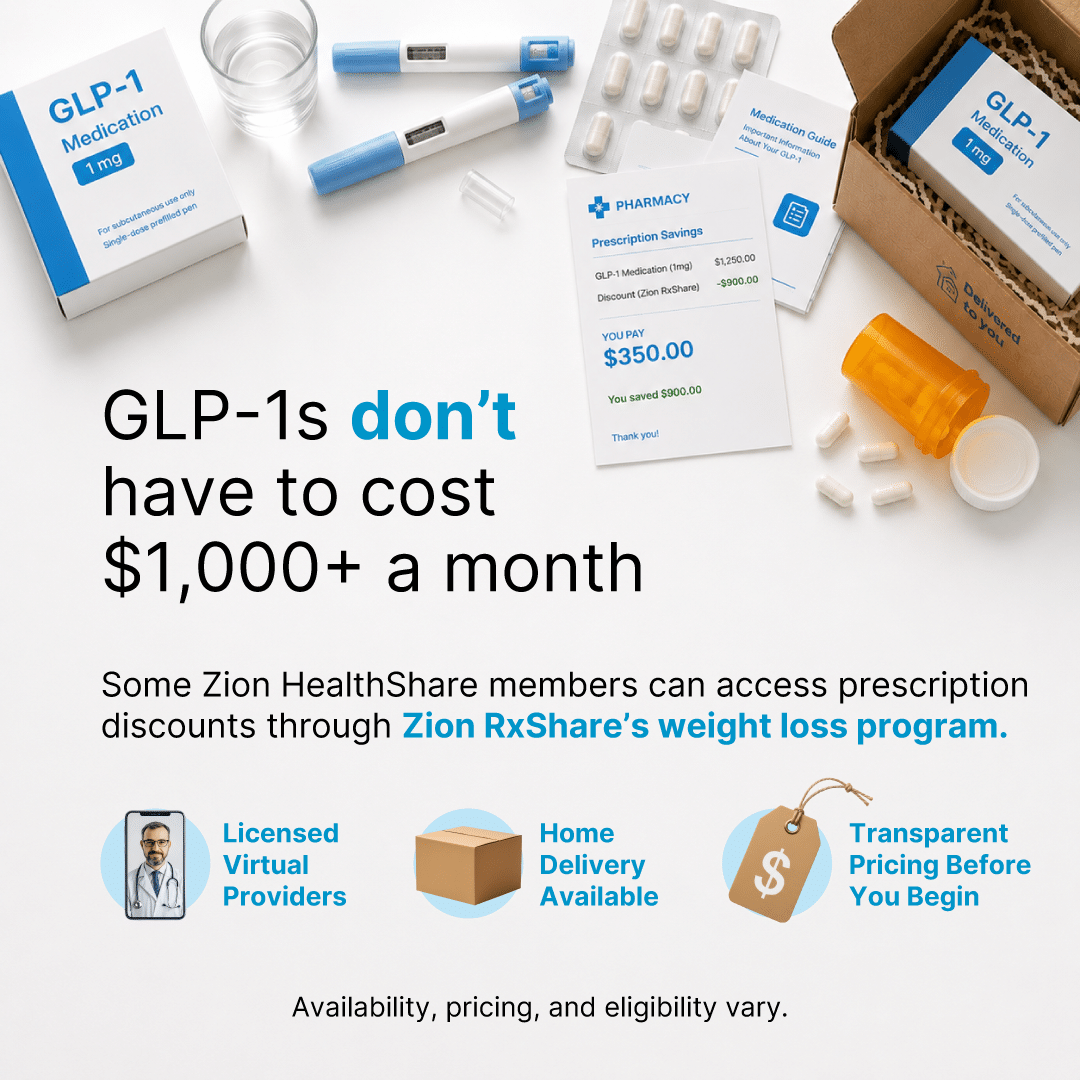
Zion Healthshare members get access to Zion RxShare, a prescription discount program. Within that, there is a specific weight loss program that helps people access their GLP-1s, when approved, at a fraction of the cost. Zion HealthShare RxShare members access medications at steep discounts. In fact, members save around 80% compared to retail costs through this program. Semaglutide can run as little as $250 a month and Tirzepatide starts around $350 a month.
Members enjoy ease of access to medications. The home delivery program relieves costs and also provides members more convenience with delivery right to their door. Also, for those without providers already, Zion RxShare connects them with a provider who can help and easily send medications to the pharmacy. Through the weight loss program, Zion RxShare’s licensed virtual physicians help patients create a weight loss treatment plan using the right medications for them.
GLP-1 medications might be eligible for cost sharing through Zion HealthShare as well, when they’re tied to an eligible sharing request. Members use the Zion RxShare’s weight loss program page to select one of two pathways: those who already have a semaglutide or tirzepatide medication, and those who need to determine if they qualify to access one without a prescription already in hand.

Medications are then shipped from a mail-order compounding pharmacy in Greeneville, South Carolina, to the member’s door. Through this GLP-1 telemedicine program, Zion RxShare will reach out monthly to verify the dosage and place the next order, to help members determine if they need the same dose or a new one.
Zion RxShare benefits are one of the most popular benefits Zion HealthShare members enjoy, as they get a much more convenient, accessible, and transparent pricing experience for their prescriptions.
Members should note that Zion RxShare doesn’t guarantee availability, pricing, or sharing eligibility for every patient on a GLP-1. Instead, they encourage patients to consult their providers about the best medication for them.
Zion HealthShare vs. Traditional Prescription Access
Frequently Asked Questions About GLP-1s at Zion HealthShare
-
Does Zion HealthShare share GLP-1 medication costs?
Expenses related to weight reduction are considered pre-membership medical conditions and are subject to the sharing phase-in period. These expenses are eligible for up to $3,000 per sharing request. Prescriptions may also be available through Zion RxShare, an exclusive prescription discount program for Zion HealthShare members. Medications available through the Zion RxShare portal do not require a sharing request and may be purchased with a prescription from a licensed medical provider. -
What does Zion RxShare's weight loss program include?
The weight loss program includes a comprehensive offering designed to help you achieve your weight loss goals, including access to medications and healthcare providers who can support you throughout your journey. -
How much do GLP-1 medications cost through Zion RxShare?
Final pricing depends on several factors, including the specific medication, dosage, and frequency. Before deciding whether a medication is right for you, you'll receive a clear, transparent quote showing your monthly cost and how pricing may change if your dosage changes. -
What should I review before joining Zion HealthShare?
Before becoming a member, we encourage you to review our How It Works page to learn more about how membership works and determine whether Zion HealthShare is the right fit for your healthcare needs.
What to Review Before Joining
Members enjoy a variety of eligible expenses that people can review before deciding if the program is right for them. For prescriptions to be eligible, they must be related to the treatment of an eligible sharing request, be ordered by a licensed provider, and be approved by Zion HealthShare. Once a GLP-1 is determined as eligible, the member will be reimbursed for the cost or given a credit card for the exact cost at the pharmacy.
The Bottom Line: Know Your Options Before You Enroll
Ready to Learn More? Visit our membership options page to get started.

ABOUT THE AUTHOR
Alexandra Frost
Member of the Zion HealthShare Editorial Team
Alexandra Frost is a Cincinnati-based journalist and content strategist with 15 years of experience. She has written for national publications like the New York Times, Washington Post, Atlantic, Forbes, and others. She has also contributed to multiple healthcare associations and hospital systems’ publications. She is a parent to five young kids and a cancer survivor passionate about strong healthcare content.
Read more of her work at www.alexandra-frost.com.
Current as of: October 19, 2026
Zion HealthShare operates as a non-profit medical cost-sharing community. We are not insurance and cannot operate in the state of Washington. Please review our State Notices for important state-specific information. The content in this blog is meant to be informative in nature, but it shouldn’t be taken as medical advice, and it shouldn’t take the place of medical advice or supervision from a trained professional.