
If you’ve explored an autism diagnosis for a child or yourself, you’ve likely found that costs and coverage aren’t always straightforward. Provider estimates, insurance details, and wait times often don’t line up, leaving many people stuck in uncertainty while trying to get answers.
Autism spectrum disorder affects about 1 in 31 children in the U.S., and many adults remain undiagnosed, which contributes to high demand, longer wait times, and variable costs. Pricing can differ based on provider type, location, and evaluation complexity, as well as whether care is covered by insurance or paid out of pocket. Knowing what to ask before scheduling can help reduce surprises and create a clearer path forward.
What Does an Autism Evaluation Actually Include?
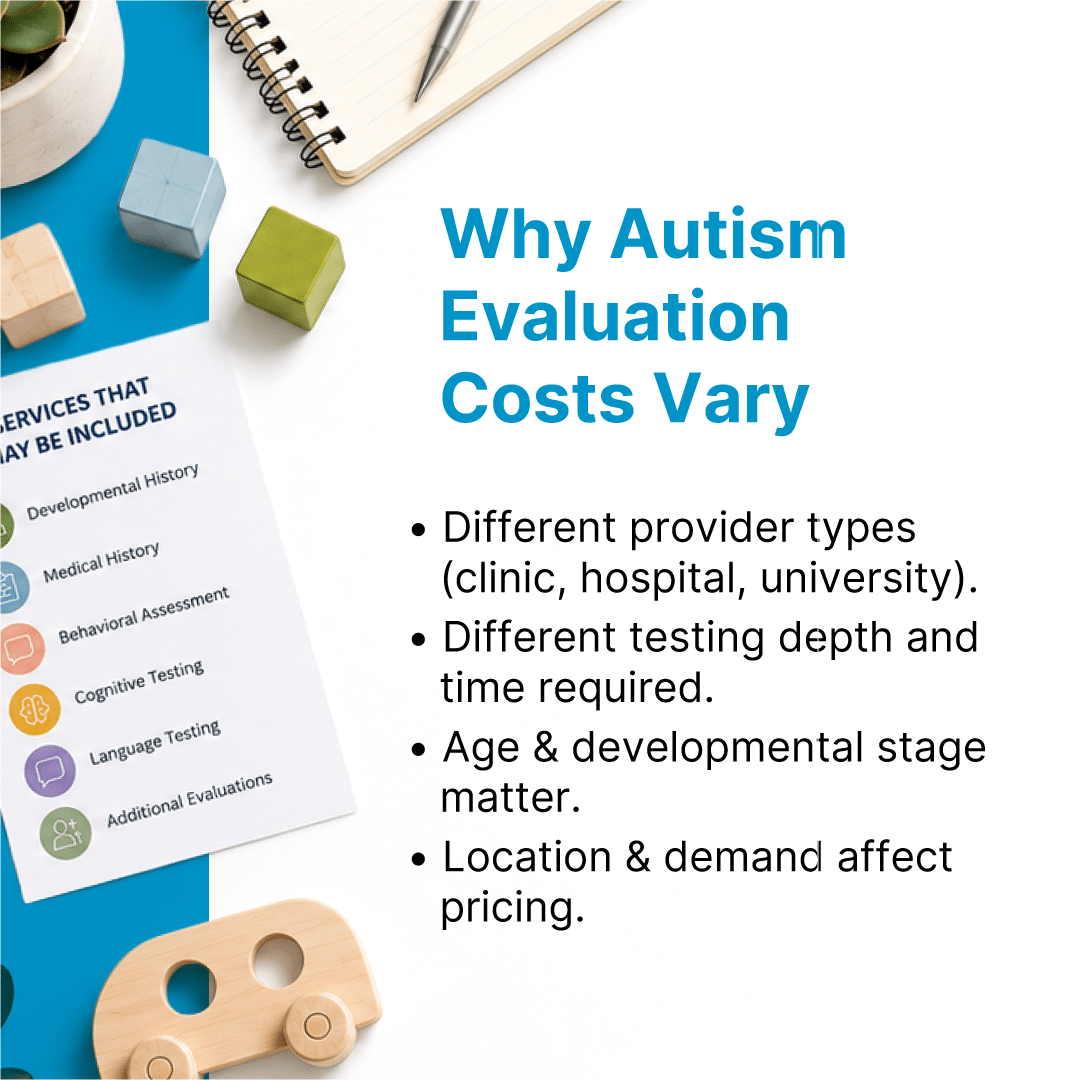
First, an autism evaluation is not a single test, but a multi-step process that builds a more complete picture of how a person thinks, communicates, learns, and interacts with the world around them. A comprehensive autism assessment typically includes:
- Developmental and medical history review
- Standardized behavioral assessments (ADOS-2 or ADI-R)
- Cognitive and language testing
Depending on the case, it may also include speech, occupational therapy, or psychiatric evaluations. The process often spans multiple appointments with final reports taking several weeks to complete in some cases.
If you’ve explored an autism diagnosis for a child or yourself, you’ve likely found that costs and coverage aren’t always straightforward. Provider estimates, insurance details, and wait times often don’t line up, leaving many people stuck in uncertainty while trying to get answers.
What Does an Autism Diagnosis Cost?
Though there is no single price for an autism diagnosis, the range for an autism evaluation can typically cost $1,000–$5,000+. With insurance, your out-of-pocket cost depends on your deductible, copays, coinsurance, and network status. With self-pay, you pay the provider directly which often has more transparent pricing upfront. The key when comparing autism testing costs is knowing what to ask before you begin.
Why Autism Testing Costs Can Vary So Much
The autism assessment cost for a toddler differs significantly from an evaluation for a teenager or adult depending on different tests, specialists, and time requirements. Private clinics, hospital systems, and university training programs have different pricing structures too.
The scope of testing matters too, as behavioral observations are generally less expensive than full evaluations that include cognitive, academic, and psychiatric components, though some families may offset costs through insurance, sliding-scale programs, university clinics, or prescription discount options.
Getting an Autism Diagnosis With Insurance: What to Expect
All 50 states have taken some action related to autism services in state-regulated health plans, but requirements vary by state, age, service type, and plan type. Families should confirm whether diagnostic evaluations, therapy, follow-up care, and related services are included before scheduling.
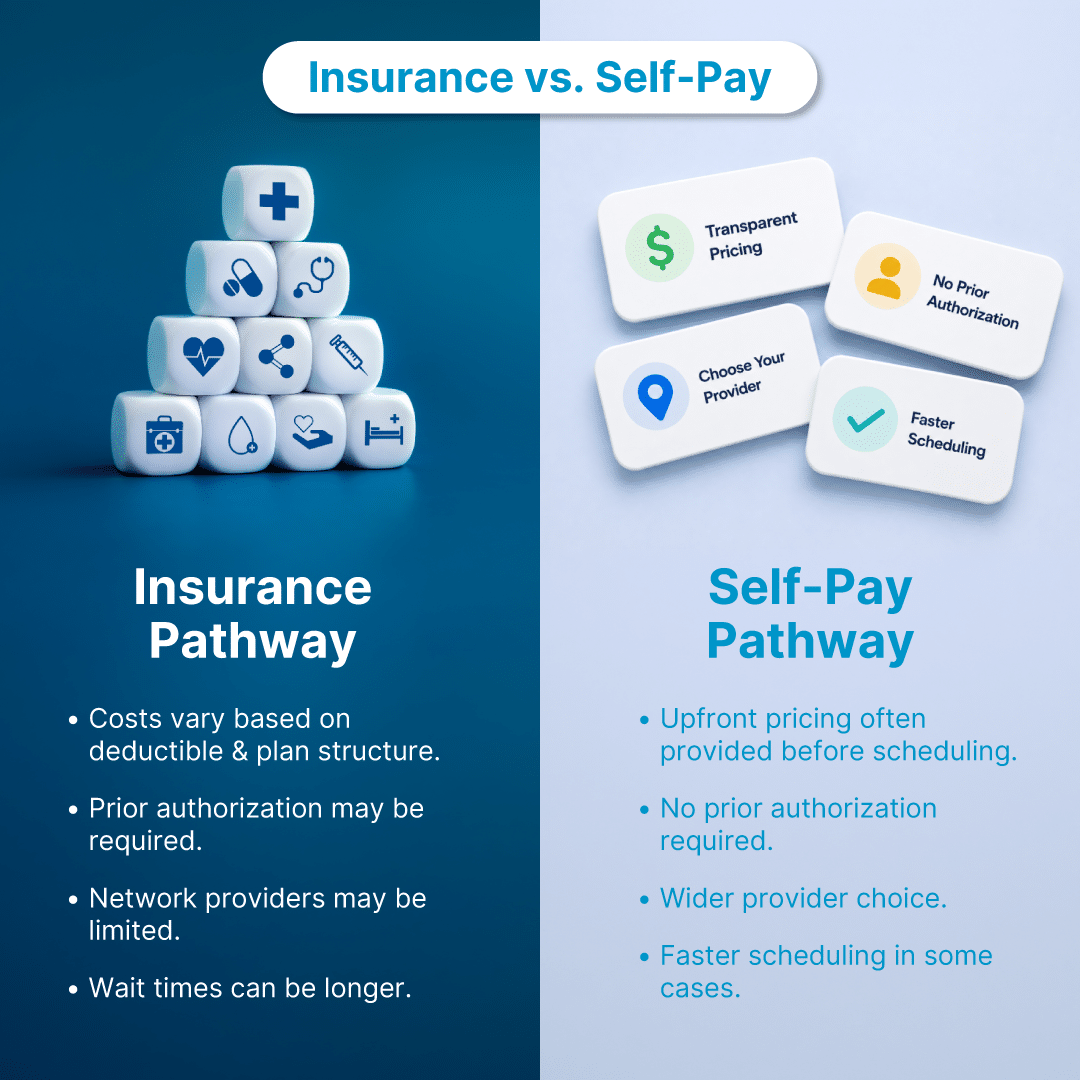
Even with insurance, out-of-pocket costs for evaluations, follow-up care, or prescriptions can still depend on deductibles, copays, coinsurance, network status, and prior authorization requirements. It’s important to confirm coverage details and estimated costs with both your insurer and provider before scheduling.
How a Self-Pay Autism Evaluation Works
For some families, self-pay can be the more practical choice, even when the upfront number looks larger. Self-pay means paying the provider directly without running a claim through insurance. Here’s what that typically involves:
Upfront Pricing Transparency
One of the most common reasons families explore self-pay is the ability to know the cost before testing. Many self-pay providers publish their evaluation fees or share them upon request. This kind of clarity makes it easier to budget and compare options without waiting weeks for an Explanation of Benefits.
A 2024 Bentley-Gallup survey found that while 95% of Americans believe healthcare providers should clearly share prices before treatment, only 17% said they typically know the cost of care in advance.
Your Right to a Good Faith Estimate
When not using insurance, federal law requires providers to give you a written Good Faith Estimate before scheduling services. It’s not a final bill, but it gives your family a clear cost baseline and a legal basis for disputing charges that exceed the estimate by more than $400. This is why knowing your rights is so important. Comparing providers and autism testing costs upfront gives families a practical written safeguard to reference if the final bill does not align with the estimate provided.
Freedom to Choose Your Provider
Without network restrictions, you can prioritize the right specialization or the soonest availability instead of whoever accepts your plan. For families in areas with limited in-network specialists or adults looking for doctors experienced with late-diagnoses, that flexibility can affect the quality of the evaluation significantly.
Some families choose self-pay because it offers a faster, more predictable path to getting answers on their autism diagnosis, even if they have insurance. The decision isn’t always about which option costs less in absolute terms, but often which option creates less uncertainty during an already stressful time.
Insurance vs. Self-Pay: A Side-by-Side Look at Autism Diagnosis Considerations
Every family’s situation is different. What matters most in this decision depends on your current coverage, your financial situation, your location, and how quickly you need answers. This comparison isn’t designed to steer you toward one option but can help you see what the full picture could look like for you.
You Have More Options Than It May Feel Like Right Now
A neurodivergent diagnosis shouldn’t leave your family stuck between needing care and finding a way to access it. The most important step is going in informed to ask about costs before you schedule an evaluation, not after.
For some families comparing healthcare options, Zion HealthShare’s lower monthly membership contributions may provide more flexibility when budgeting for self-pay medical expenses outside of sharing. Zion HealthShare is a nonprofit, membership-based medical cost sharing community and is not insurance, so it is important to review whether membership aligns with your healthcare needs.
Members seeking prescription support may also explore Zion RxShare, a separate prescription discount program that may offer additional savings on prescriptions. Because Zion RxShare is separate from medical cost sharing, members can review available pricing and discounts directly through the program.
Frequently Asked Questions
- How much does an autism evaluation cost without insurance? A self-pay autism evaluation typically costs between $1,000 and $5,000 or more, depending on the provider, location, and scope of testing. Requesting a Good Faith Estimate before scheduling can give you a written cost estimate to help you plan and compare providers.
- Does insurance cover autism diagnosis costs? Most states require insurance plans to provide some level of coverage for autism evaluations for children, but coverage varies based on state laws, age requirements, service type, and your specific health plan. Even when an evaluation is covered, your out-of-pocket costs can still depend on your deductible, copays, coinsurance, and network status.
- What is a Good Faith Estimate, and why does it matter? A Good Faith Estimate is a written estimate of expected healthcare costs provided before you receive care when you are not using insurance. It gives you a clearer picture of what you'll pay and provides legal protections if your final bill exceeds the estimate by more than $400.
- Is there a difference in autism testing costs for children versus adults? Yes. Adult evaluations often focus more on cognitive testing and self-reported history, while children's evaluations typically rely more heavily on structured behavioral observations. Insurance coverage for adult evaluations is also less consistently required than coverage for children.
- Can Zion HealthShare help with autism evaluation costs? Autism and other neurodivergent disorders, including related testing and evaluations, are not eligible for sharing through Zion HealthShare. However, some families choose Zion HealthShare because its lower monthly membership contributions may provide more flexibility in their household budget for self-pay healthcare expenses. Members may also use Zion RxShare for potential savings on eligible prescription medications.
Zion HealthShare operates as a non-profit medical cost-sharing community. We are not insurance and cannot operate in the state of Washington. Please visit our website for state notices. The content in this blog is meant to be informative in nature, but it shouldn’t be taken as medical advice, and it shouldn’t take the place of medical advice or supervision from a trained professional.

ABOUT THE AUTHOR
Kristina Lopez
Member of the Zion HealthShare Editorial TeamThis story was written by Kristina Lopez. She is an SEO & email copywriter and copy editor for health professionals, wellness brands, lifestyle publications, and travel brands.