

Healthcare pricing can feel unpredictable but understanding how hospital bills are created can help you make more informed healthcare decisions. Learn why hospital bills vary, what influences medical costs, and how tools like price transparency and Good Faith Estimates can help you better understand what you may pay before receiving care.
Why Are Hospital Bills So Expensive?
Opening a hospital bill can raise a lot of questions. Why did a routine procedure cost so much? Why would someone else pay a different amount for similar care? And why is it often so difficult to know what healthcare will cost before you receive it?
Hospital bills often reflect more than the cost of a single procedure. Negotiated insurance rates, hospital operating costs, and payment arrangements all influence what patients ultimately pay.
If healthcare pricing has ever felt confusing or unpredictable, you’re not imagining it. Unlike most purchases, the final cost of medical care often depends on several factors that aren’t immediately visible.
For many people, the biggest frustration isn’t just the cost. It’s the uncertainty. Medical care often comes without a clear price tag upfront, making it difficult to compare prices, plan ahead, or understand exactly what you’re paying for.
The good news is that healthcare pricing is becoming more transparent. Today, patients have more opportunities to understand potential costs before receiving care, ask informed questions, and compare their options. Understanding how hospital pricing works won’t eliminate every surprise, but it can help you make more informed healthcare decisions.
How Hospital Prices Are Created
If you’ve ever wondered why the same medical procedure can have different prices, it’s because hospitals don’t have a single price for most services.
Instead, hospitals begin with an internal pricing document called a chargemaster, which lists standard prices for procedures, medications, tests, and supplies. Those prices are only a starting point.
The amount a patient ultimately pays depends on several factors, including negotiated rates with insurance companies, self-pay pricing, government reimbursement programs, and the costs of operating a hospital.
Rather than reflecting one fixed price, a hospital bill is often the result of multiple pricing systems working together.
Why Paying Cash Can Often Cost Less
One of the more surprising things about healthcare pricing is that paying without insurance can usually cost less than using it. While that may seem counterintuitive, it reflects the different ways healthcare prices are negotiated and billed.
Insurance companies negotiate reimbursement rates with providers before patients receive care, and those agreements vary by insurer. Some providers also offer self-pay pricing because direct payment can reduce administrative work and simplify the billing process.
That doesn’t mean paying cash is always the least expensive option or that insurance isn’t valuable. Depending on your health coverage and the care you need, using insurance may still make the most financial sense.
If you’re scheduling non-emergency care, asking about both insurance pricing and self-pay pricing can help you better understand your options before treatment begins.

How Price Transparency Is Changing Healthcare
For many years, one of the biggest challenges for patients wasn’t just the cost of healthcare. It was knowing what care might cost before receiving it.
That’s beginning to change.
Federal price transparency requirements have made more pricing information available, giving patients additional tools to better understand healthcare costs before scheduling care.
One of those tools is the Good Faith Estimate. If you’re uninsured or paying for care yourself, you may have the right to receive an estimate of expected charges before scheduled medical services, helping you better understand potential expenses before treatment begins.
Many hospitals are also required to publish pricing information. Although comparing prices can still be challenging because providers present information differently and individual circumstances affect the final cost of care, these resources make it easier to ask informed questions, compare options, and prepare financially before receiving care.
Five Factors That Influence Your Hospital Bill
Understanding what influences your healthcare costs is the first step. The next is knowing how to use that information before receiving care.
Five Ways to Better Understand Your Healthcare Costs
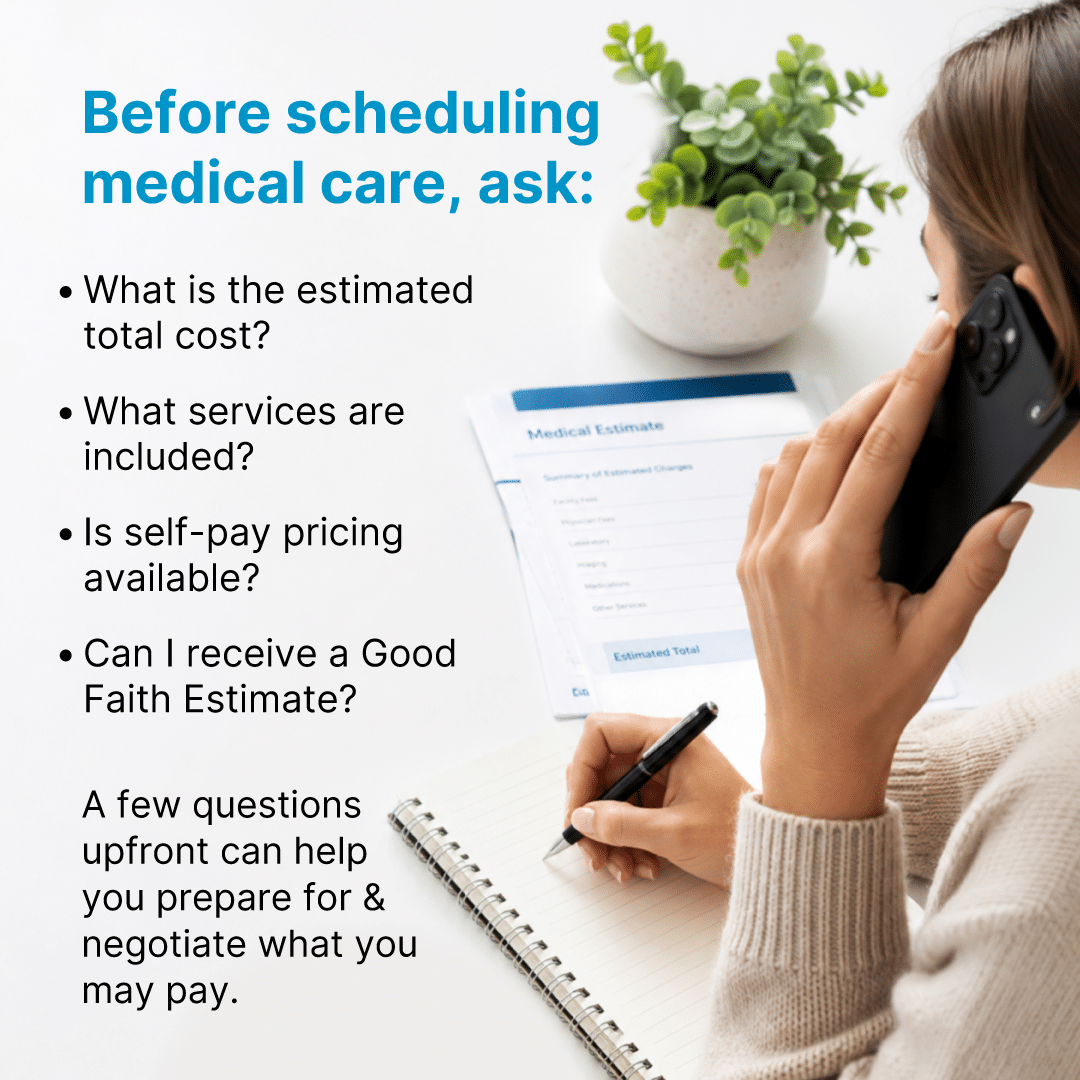
While you can’t control every healthcare expense, you can take steps to better understand what you may pay before receiving care. Asking a few questions ahead of time can help you make more informed decisions and avoid unexpected costs.
Ask for a Good Faith Estimate
If you’re uninsured or paying for care yourself, ask whether you can receive a Good Faith Estimate before scheduled medical services. It outlines your expected costs before treatment begins and can help you prepare financially.
Compare Prices for Non-Emergency Care
If you’re scheduling an imaging test, outpatient procedure, or other non-urgent service, compare prices between providers when possible. Many hospitals publish pricing information online, and billing offices can often answer questions about expected costs.
Ask About Self-Pay Pricing
If you’re paying out of pocket, ask whether self-pay or cash-pay pricing is available. Some providers offer different pricing for scheduled services, giving you another option to consider before receiving care.
Understand What’s Included
Healthcare bills often include more than the procedure itself, including physician services, laboratory work, imaging, medications, and facility fees. If something isn’t clear, ask for an explanation before treatment whenever possible.
Use Available Resources
Many hospitals have financial counselors or billing specialists who can answer questions about estimates, bills, and payment options before care is provided. Taking advantage of these resources can help you make more informed healthcare decisions.
Why Some People Explore Healthcare Sharing and Direct Primary Care
As people learn more about healthcare pricing, some begin exploring different ways to pay for and receive care.
One option that has gained attention in recent years is Direct Primary Care (DPC). Instead of billing insurance for routine primary care visits, DPC practices typically operate through a membership model that provides access to routine care, longer appointments, and direct communication with a physician.
Some individuals and families also explore healthcare sharing as part of their broader healthcare strategy. Healthcare sharing is not health insurance. Instead, it is a community-based approach in which members voluntarily share eligible medical expenses according to established member guidelines.
Organizations such as Zion HealthShare offer educational resources that explain how healthcare sharing works and how it differs from health insurance. Every person’s healthcare needs are different, so understanding the available options can help you choose an approach that aligns with your healthcare priorities, budget, and personal circumstances.
Conclusion
Hospital bills often feel confusing because healthcare pricing is complex. The amount you ultimately pay may reflect negotiated rates, payment arrangements, administrative costs, and the type of care you receive rather than a single fixed price.
The good news is that patients have more tools than ever to better understand healthcare costs before receiving care. Price transparency initiatives, Good Faith Estimates, and publicly available pricing information make it easier to ask questions, compare options, and prepare financially.
Understanding how hospital pricing works won’t eliminate every surprise, but it can help you make more informed healthcare decisions with greater confidence. Learn more about how Zion HealthShare helps members navigate healthcare costs and explore membership options.
Frequently Asked Questions
-
Why are hospital bills so expensive?
Hospital bills include more than the procedure itself. The final cost may reflect physician services, medications, facility fees, administrative expenses, negotiated reimbursement rates, and other factors involved in delivering care. -
Why can the same procedure cost different amounts?
Healthcare services don't have a single fixed price. Costs vary based on negotiated insurance rates, self-pay pricing, the provider, geographic location, and the services included in your care. -
What is a chargemaster?
A chargemaster is a hospital's internal list of standard prices for medical services, medications, and supplies. It serves as a starting point for pricing but usually isn't the amount patients ultimately pay. -
Can paying cash really cost less?
Sometimes. Some providers offer self-pay pricing that differs from negotiated insurance rates. Whether paying cash is the better option depends on your health coverage, deductible, and the care you need. -
What is a Good Faith Estimate?
A Good Faith Estimate outlines expected healthcare charges for many uninsured and self-pay patients before scheduled medical services, helping them better understand potential costs. -
What is the No Surprises Act?
The No Surprises Act is a federal law that helps protect patients from many unexpected medical bills. It requires healthcare providers to give uninsured or self-pay patients a Good Faith Estimate before scheduling services and limits certain surprise bills for emergency care and out-of-network services. While it doesn’t eliminate every unexpected healthcare expense, it gives patients more information about what they may owe before receiving care. -
What is the difference between self-pay and cash pay?
In most healthcare settings, self-pay and cash pay mean the same thing: you're paying for your medical care yourself instead of using insurance. The term "cash pay" doesn't necessarily mean you have to pay with physical cash. Most providers accept credit cards, debit cards, checks, or other forms of payment. Because different providers use different terminology, it's helpful to ask whether self-pay or cash-pay pricing is available when scheduling care. -
How can I better understand healthcare costs before receiving care?
Ask questions before treatment, request an estimate of expected charges, compare prices for non-emergency services, review what's included in your bill, and ask about available payment options.
Current as of: October 19, 2026
Zion HealthShare operates as a non-profit medical cost-sharing community. We are not insurance and cannot operate in the state of Washington. Please visit our website for state notices.

ABOUT THE AUTHOR
Tai Freligh
Member of the Zion HealthShare Editorial Team This story was written by Tai Freligh. Tai is a senior copywriter, content strategist, and independent consultant with more than 15 years of experience helping brands such as Microsoft, LinkedIn, Merck, CVS Health, HP, and Petco communicate complex ideas clearly. His work spans healthcare, enterprise technology, hospitality, media, and entertainment. He also runs Raised in the 80s, a pop culture TikTok community with more than 38,000 followers.