
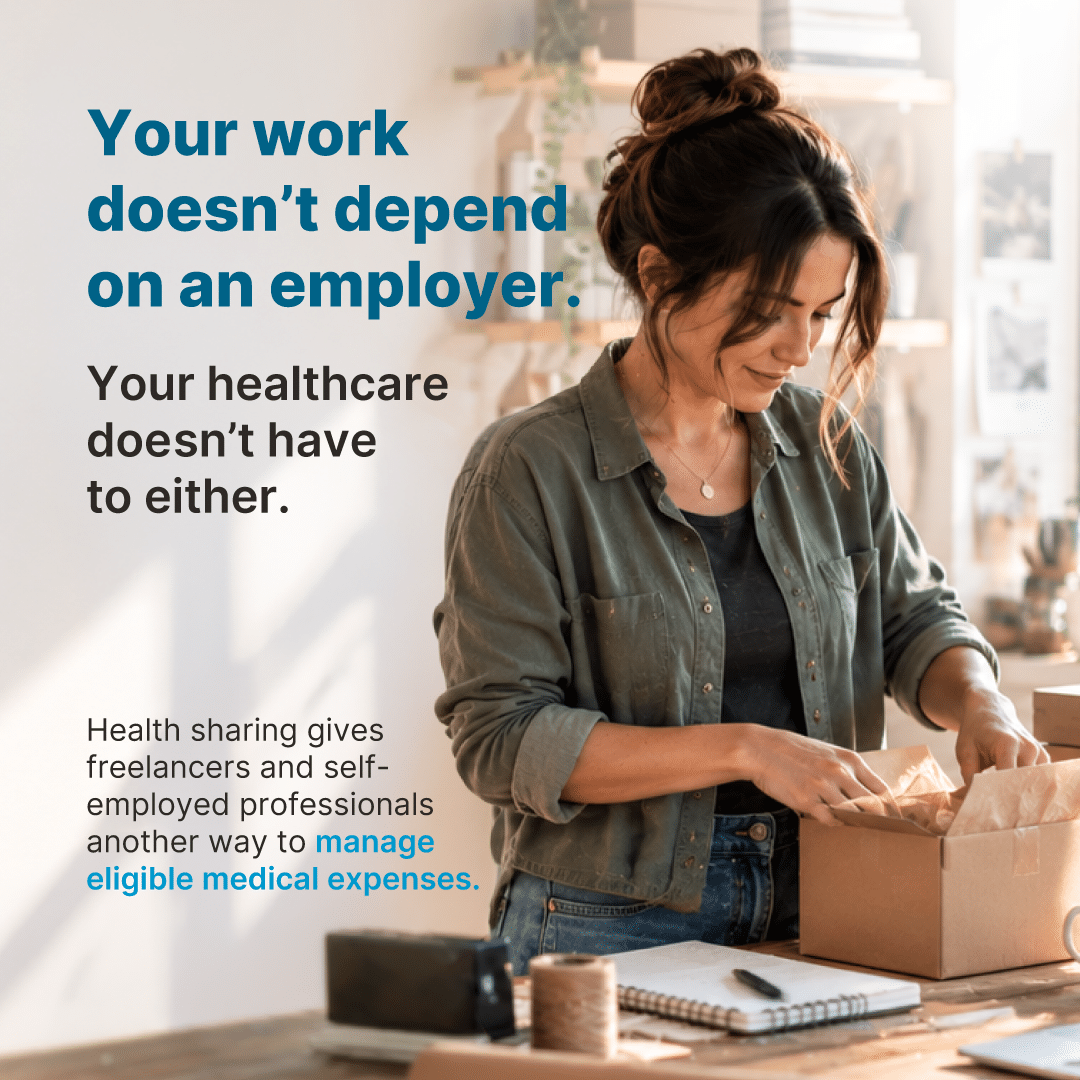
Leaving a traditional job can be exciting, as it often means gaining more freedom, but it also, unfortunately, means losing employer-sponsored health insurance. For those who are self-employed or freelancers, finding affordable healthcare can easily become one of the biggest challenges of working for yourself.
Rising premiums, high deductibles, and complicated insurance plans can often leave you wondering if there’s a better way. This guide explains the healthcare options available if you’re working for yourself and why many people are turning to health sharing and direct primary care for their healthcare.
Why Healthcare is Different When You’re Self-Employed
When you’re employed by a company, your employer often contributes towards your health insurance premium. Once you’re self-employed, that financial support disappears.
According to an NFIB survey, cost is the biggest reason many small businesses struggle to offer health insurance, with nearly every employer surveyed expressing concerns about long-term affordability.
At the same time, Marketplace plans have become more expensive for many Americans. A recent KFF analysis found that average Marketplace deductibles increased by 37%, or more than $1,000, in 2026 with many people shifting toward higher-deductible plans.
What healthcare options are available if you don’t have employer coverage?What healthcare options are available if you don’t have employer coverage?
If you’re looking for healthcare without employer insurance, there isn’t a one-size-fits-all solution. Common options include:
Marketplace Health Insurance
Many self-employed people purchase insurance through the Health Insurance Marketplace. Depending on your income, you may qualify for premium tax credits that help reduce costs. Marketplace plans provide comprehensive insurance coverage and are regulated under the Affordable Care Act.
Health Sharing Memberships
Many people choose health sharing because it can provide a more affordable alternative to health insurance while still helping members share eligible healthcare costs.
What is Health Sharing?
Health sharing isn’t health insurance. Instead, members voluntarily contribute a monthly amount that allows eligible medical expenses to be shared among the membership community, according to established membership guidelines.
Instead of paying premiums to an insurance company, members participate in a community that shares healthcare costs together. At Zion HealthShare, you can choose a membership that fits your household and share eligible medical expenses through a transparent, community-focused model.
If you’re new to health sharing, our guide about how health sharing works provides a helpful overview before deciding if it’s right for you.
What is Direct Primary Care (DPC)?
Direct Primary Care (DPC) is another healthcare model that’s growing rapidly among self-employed professionals. Instead of billing insurance, patients pay their primary care physician a monthly membership fee for routine medical care.
Depending on the practice, this often includes:
- office visits
- check-ups
- urgent care
- chronic condition management
- 24/7 access by phone, text, or video
- longer visits with your doctor
- same-day or next-day appointments
Many people appreciate the simplicity of DPC because it removes insurance paperwork from routine healthcare and creates a closer relationship with their physician.
The Direct Primary Care Alliance provides more information about how this model works.
Why Do Self-Employed Individuals Combine DPC and Health Sharing?
One of the most common misconceptions out there is that you have to choose between these options. In reality, many self-employed households use Direct Primary Care and health sharing together. They complement each other by covering different aspects of healthcare.
A DPC membership can provide convenient access to everyday medical care, and a health sharing membership can help members share eligible larger healthcare expenses that would otherwise create financial strain.
For self-employed individuals, freelancers, and entrepreneurs, this combination often offers:
- Better access to primary care
- Predictable monthly healthcare costs
- Fewer concerns about paying for routine doctor visits
- Financial support for eligible unexpected medical needs
For many people, it’s a practical alternative to relying solely on health insurance.
Health Sharing vs Insurance: What’s the Difference?
Although both options help people manage their healthcare costs, they’re fundamentally different.
Health insurance may be the best fit for some households, while health sharing may appeal to those looking for affordability, flexibility, and a community-based approach.
If you’re weighing your options, our article on the pros and cons of ditching health insurance for health sharing explores these differences in greater detail.
Don’t Forget About Prescription Costs
Routine prescriptions can quickly become a significant ongoing expense, particularly if you’re paying entirely out of pocket. Many health sharing members choose to supplement their membership with prescription savings programs.
For example, Zion RxShare helps eligible members reduce prescription medication costs, making it easier to budget for ongoing healthcare needs. If you take regular medication, it’s worth considering prescription savings alongside whichever healthcare option you choose.
Can You Join Health Sharing Outside Open Enrollment?
One advantage many people appreciate about health sharing is its flexibility. Unlike Marketplace insurance, which generally has annual Open Enrollment periods unless you qualify for a Special Enrollment Period, health sharing memberships allow you to join throughout the year.
This can be particularly helpful if you’ve recently:
- left an employer
- started freelancing
- launched a business
- become an independent contractor
Our guide explains whether you can join a health share anytime or only during Open Enrollment and what to expect when applying.
Is Health Sharing Right for You?
Every household has different healthcare needs, financial priorities, and preferences.
It may be worth exploring health sharing if you:
- Are self-employed or freelance
- Don’t receive employer-sponsored health benefits
- Want more predictable monthly healthcare costs
- Value flexibility when choosing healthcare providers
- Like the idea of a community-based approach to sharing eligible medical expenses
If routine access to a doctor is also important to you, combining health sharing with Direct Primary Care may provide an even more comprehensive healthcare strategy.
Frequently Asked Questions
-
When should I enroll in Zion HealthShare if I'm planning to become self-employed?
You can join Zion HealthShare throughout the year, so you don't need to wait for Open Enrollment or until your business is up and running. If you're planning to leave a job with employer-sponsored health insurance, it's worth exploring your healthcare options before making the transition. You can plan your membership start date around your move into self-employment rather than waiting until you've already left your job. -
Can health sharing make it easier to leave my job and pursue self-employment?
For many people, one of the biggest obstacles to starting a business or freelancing full-time is the cost of losing employer-sponsored health insurance. When you're responsible for finding your own healthcare option, expensive insurance premiums and high deductibles can make leaving a steady job feel financially out of reach. Health sharing offers another option. Zion HealthShare provides a more affordable alternative to health insurance, with monthly contributions and a community that shares eligible medical expenses. Instead of assuming you have to stay in a job for the health insurance, you can explore an option that fits your household and budget. For aspiring entrepreneurs and freelancers, finding affordable healthcare may make pursuing self-employment a more realistic possibility. -
Why do freelancers and self-employed individuals choose Zion HealthShare?
When you're working for yourself, managing expenses and having flexibility are especially important. Zion HealthShare offers membership options for individuals and families, predictable monthly contributions, and no provider network restrictions, giving you more freedom to choose where you receive care. Direct membership also includes Preventive Sharing, prescription savings through Zion RxShare, and 24/7 virtual care. Eligible medical expenses can be shared among the membership community according to the Member Guidelines. For freelancers and self-employed individuals, Zion HealthShare offers an affordable, flexible way to manage healthcare without relying on an employer.
Finding Healthcare That Works for Your Business, Family, and Your Budget
Choosing healthcare is one of the biggest financial decisions you’ll make as a self-employed professional. While Marketplace insurance remains an option for many households, it’s no longer your only choice.
To learn more about how Zion HealthShare works, visit our How It Works page. You can also read about how Zion HealthShare provides an affordable solution to rising healthcare costs to see why many self-employed households are making the switch.

ABOUT THE AUTHOR
Hana Ames
Member of the Zion HealthShare Editorial TeamThis story was written by Hana Ames. Hana is a freelance health and wellness writer specializing in evidence-based medical, healthcare, and wellbeing content. She helps brands, clinics, pharmacies, and agencies create clear, accurate content that makes complex topics easy to understand.