
A strategy that’s been gaining attention in recent years combines direct primary care (DPC) membership with a health sharing membership. These two models complement each other to provide accessible, whole body, healthcare.
We break down each model and why combining them might be a good option for you.
What Is Direct Primary Care?
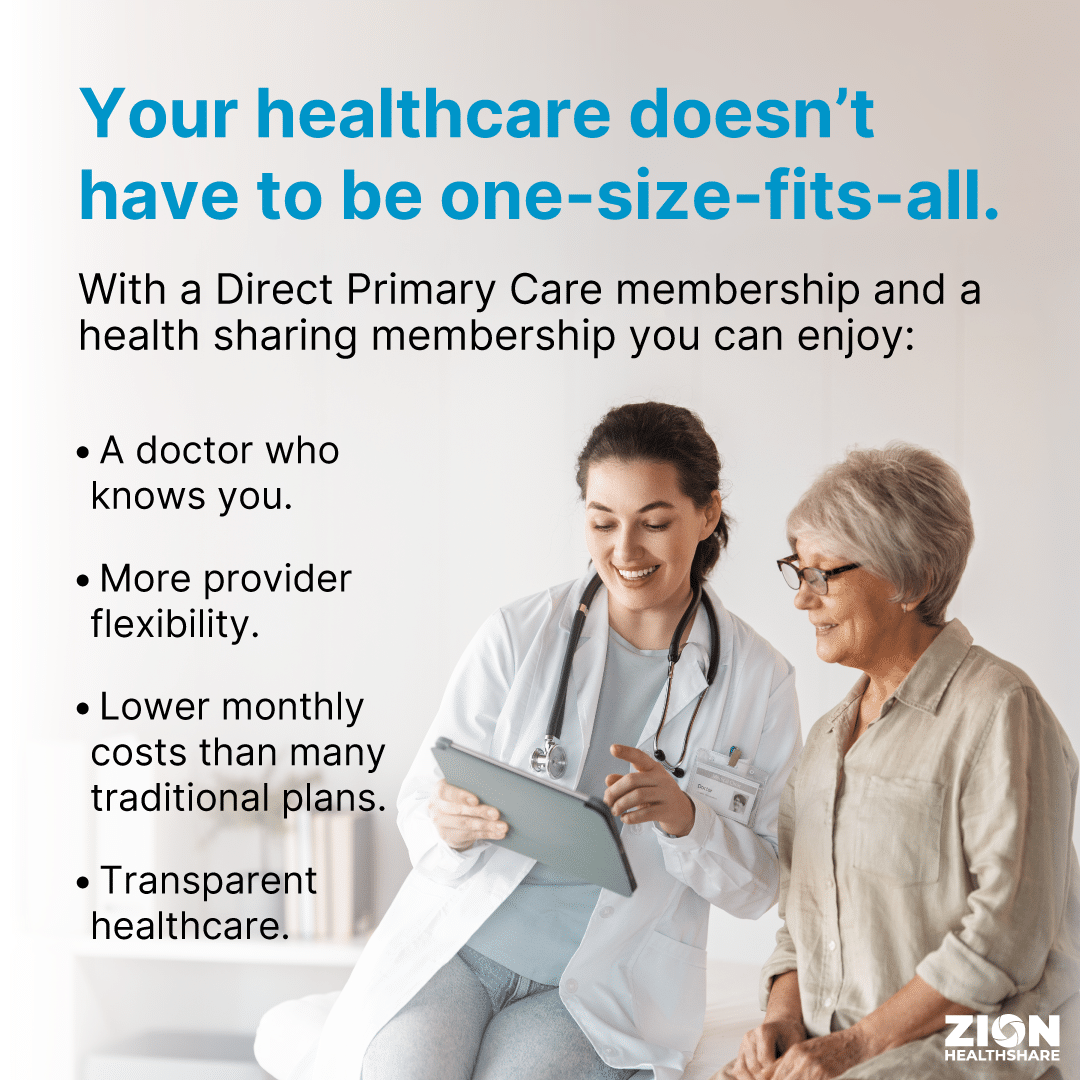
When you sign up for a DPC membership, instead of paying for a traditional insurance plan, you pay an out-of-pocket membership fee directly to your doctor. This means there’s no need for third-party insurance. Many DPC memberships start as low as $100.00 per month, a significant savings compared to most health insurance plans. And with a DPC, you never have to worry if your visit will be covered.
Once you become a DPC member, your physician provides primary care services and routine medical care at no additional cost. Because they don’t answer to a large corporation, DPC physicians spend more time getting to know you, listening to you, and creating an individualized health care plan. There’s no more rushing through appointments. You also have more access to a DPC doctor through phone calls, texts, and telehealth services.
While DPC physicians often work closely with specialists by providing recommendations when needed, membership does not include specialist fees.
What Is a Healthshare?
Unlike one-size-fits-all health insurance plans, a healthshare model is an alternative option that can be tailored to your needs. Healthshare models like Zion HealthShare, a non-profit community-driven medical cost-sharing organization, often cost half the price of an unsubsidized insurance plan. They’re more affordable and offer more flexibility, allowing you to choose your own doctors. That means you don’t have to be worried about being out of network. Some health sharing memberships also include deeply discounted prescription resources like Zion RxShare.
Another benefit of a healthshare membership is that, unlike the Affordable Care plans with strict sign up periods, healthshares allow you to sign up any time of year. Similar to a DPC model, healthshare models require a monthly fee to share eligible medical expenses with community members.
Emergency room visits, surgeries, major procedures, cancer treatment and maternity care are some of the treatments that can be shared. Depending on the situation, the healthshare may coordinate payment directly with your provider or reimburse you for eligible expenses you have paid after you meet your responsibility amount.
It’s important to know that healthshare memberships do not guarantee sharing for all your medical bills. They often don’t share routine exams or preventive care, and they often have strict waiting periods before pre-existing conditions can be shared with the community. Some healthshare memberships do include preventive care and have options for pre-existing conditions. It’s important to review each healthshare’s guidelines for the healthcare options important to you.
Why People Are Stacking DPC with a Healthshare
Finding a DPC is the first step toward comprehensive healthcare. This model offers more attention and better access to healthcare professionals for year-round routine care. But they can’t replace other forms of healthcare, especially complex medical events that require emergency coverage or hospitalization.
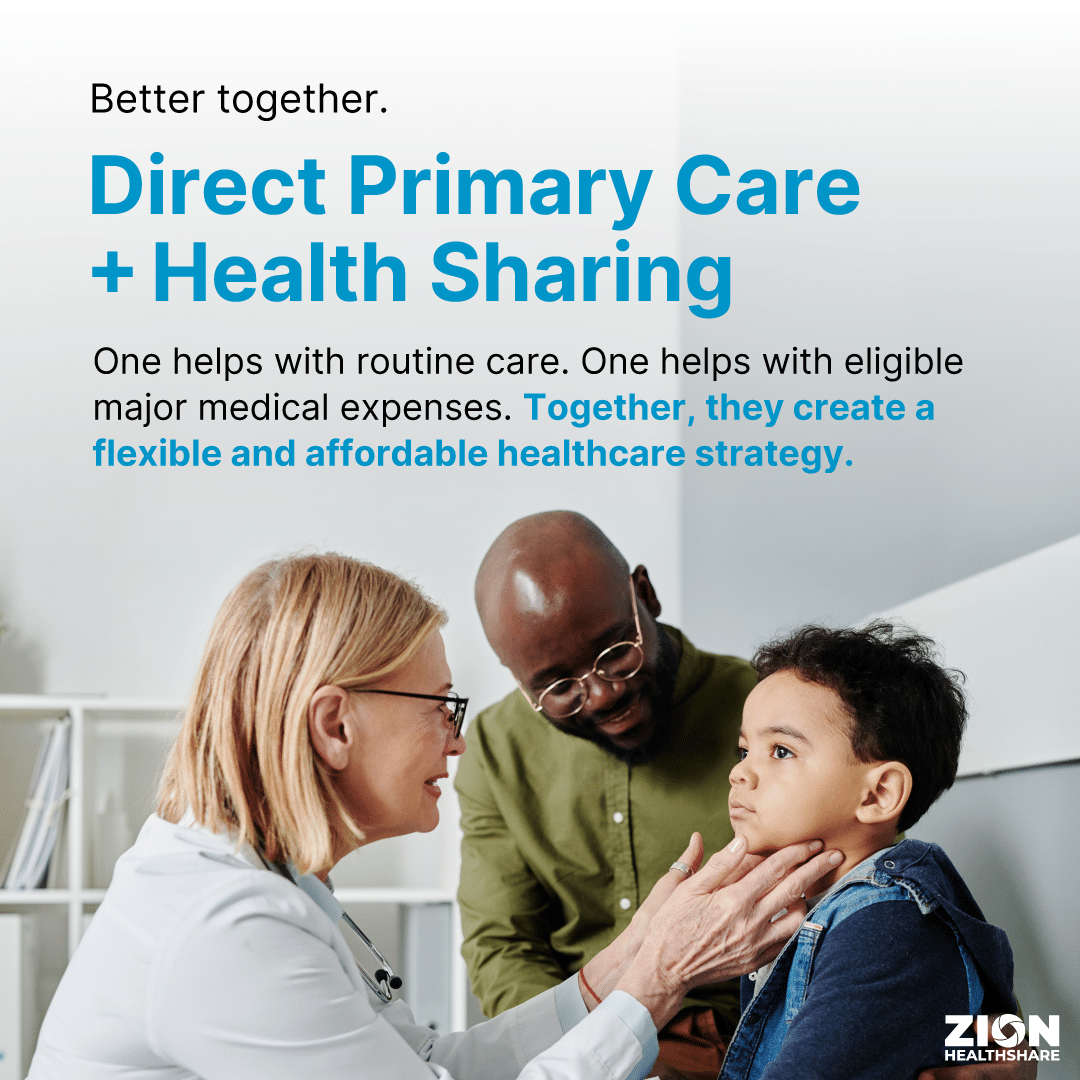
Combing a DPC with a healthshare like Zion HealthShare, allows you to have a primary care physician who understands all your medical needs throughout the year, while having a cost-sharing option for expensive medical treatment. This gives you the autonomy to create an individualized healthcare plan. When you stack these two models, you have a primary care physician of your choice, transparent pricing, and lower monthly costs than health insurance.
Here’s how it works: Let’s say you fall and hurt your knee. You would first make an appointment with your DPC. They may order an MRI and refer you to an orthopedic doctor for a consultation and possible surgery. After meeting the healthshare’s required membership amount, you would then submit the additional expenses to the healthshare program for reimbursement.
Preguntas Frecuentes
- Does combining a DPC model with a healthshare program reduce costs? Yes, combining your DPC model with a healthshare model can help you reduce costs by saving on large out-of-pocket deductibles, co-pays, and unsubsidized insurance.
- What should I know about eligible medical expenses? Sharing eligibility varies by healthshare. Some healthshares do not share expenses related to mental health medications and treatment, chronic conditions, diabetic medications and supplies, vision, hearing, or dental treatment. Expenses related to certain pre-membership conditions may also have sharing limits or a phase-in period. Each DPC and healthshare membership should clearly outline which services and expenses are eligible for sharing.
- How are pre-existing conditions treated? Most DPC’s will see you if you have pre-existing conditions. Healthshares may have waiting periods or sharing limits.
- Can I see a specialist if I have a DPC membership and a health sharing membership? Yes. Your DPC will evaluate you and recommend a specialist. If your condition is eligible for sharing, you can submit payment for reimbursement.
- How do I choose the right DPC and health sharing program? Ask for recommendations for both DPC coverage and a health sharing program. Find out what is and isn’t eligible, and how much each model costs. Then make an informed decision.
- Do Zion HealthShare members have to pay every medical bill upfront? Not always. Zion HealthShare can work with you and your provider before, during, or after you receive care. Depending on the situation, Zion HealthShare may coordinate payment directly with your provider or reimburse you for eligible expenses after you’ve met your responsibility amount also known as the Initial Unshareable Amount (IUA).
- Does Zion HealthShare share preventive care? Yes. Eligible preventive services are included with Direct Memberships for individuals and families and can be added to Essential Memberships for companies and organizations. Since each service has its own requirements, make sure to review the Member Guidelines for more information.
- Can I join Zion HealthShare if I have a pre-membership medical condition? Yes. Having a pre-membership medical condition does not prevent you from enrolling. Expenses related to that condition may have sharing limits or a phase-in period, so it’s important to review the Member Guidelines.

ABOUT THE AUTHOR
Aileen Weintraub
Member of the Zion HealthShare Editorial Team This story was written by Aileen Weintraub. Aileen Weintraub is a health and science journalist whose work has been featured in The Washington Post, AARP, The Smithsoniann and many others. She is a regular contributor to Oprah Daily y HealthyWomen, and writes for hospital systems including Northwell Health.
You can find out more about her at AileenWeintraub.com and on LinkedIn.