

What happens when I get the bill?
It’s a fair question because most people tend to think about healthcare costs through health insurance, where the usual concern is what is “covered.”
Health sharing works differently. Members share medical costs through a community rather than an insurance company. Zion HealthShare is not insurance, so it does not “cover” medical expenses. Instead, certain medical expenses may be eligible for sharing according to the Pautas de Membresía.
This article explains how the Zion HealthShare guidelines work, what types of expenses may or may not be eligible for sharing, and what prospective members should understand before joining.
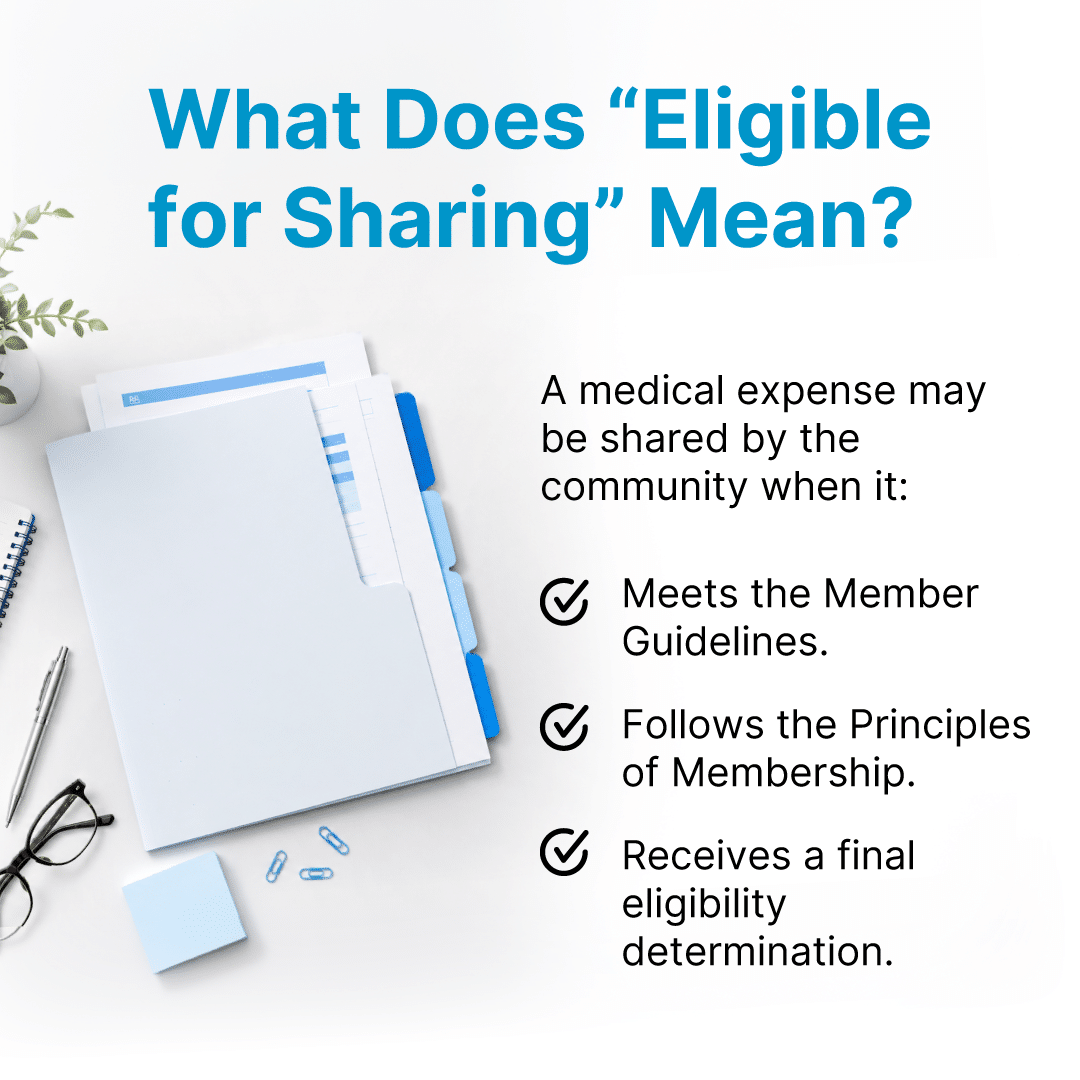
What Does “Eligible for Sharing” Mean?
“Eligible for sharing” is one of the first phrases worth understanding if you are new to Zion HealthShare.
In simple terms, members contribute monthly to a community. When another member has an eligible medical expense, those contributions may help share that cost.
An expense that is “eligible for sharing” may be shared by the Zion HealthShare community if it follows the Member Guidelines and Principles of Membership. It does not mean every medical bill is automatically paid.
Members submit sharing requests when they have a medical expense they want the community to consider. From there, the request is reviewed according to the Member Guidelines.
What Are the Zion HealthShare Member Guidelines?
El Zion HealthShare Member Guidelines are the main resource for understanding how medical expenses are considered for sharing.
They outline which expenses may be eligible, which are not eligible, and what steps members follow when submitting a sharing request. They also explain details that can affect eligibility, including timing, documentation, active membership, the Initial Unshareable Amount, sharing limits, waiting periods, and final review.
You do not need to memorize every guideline before joining. But it is worth knowing where the guidelines are, especially before submitting a sharing request or making decisions around a specific type of care.
Which Medical Expenses May Be Eligible for Sharing?
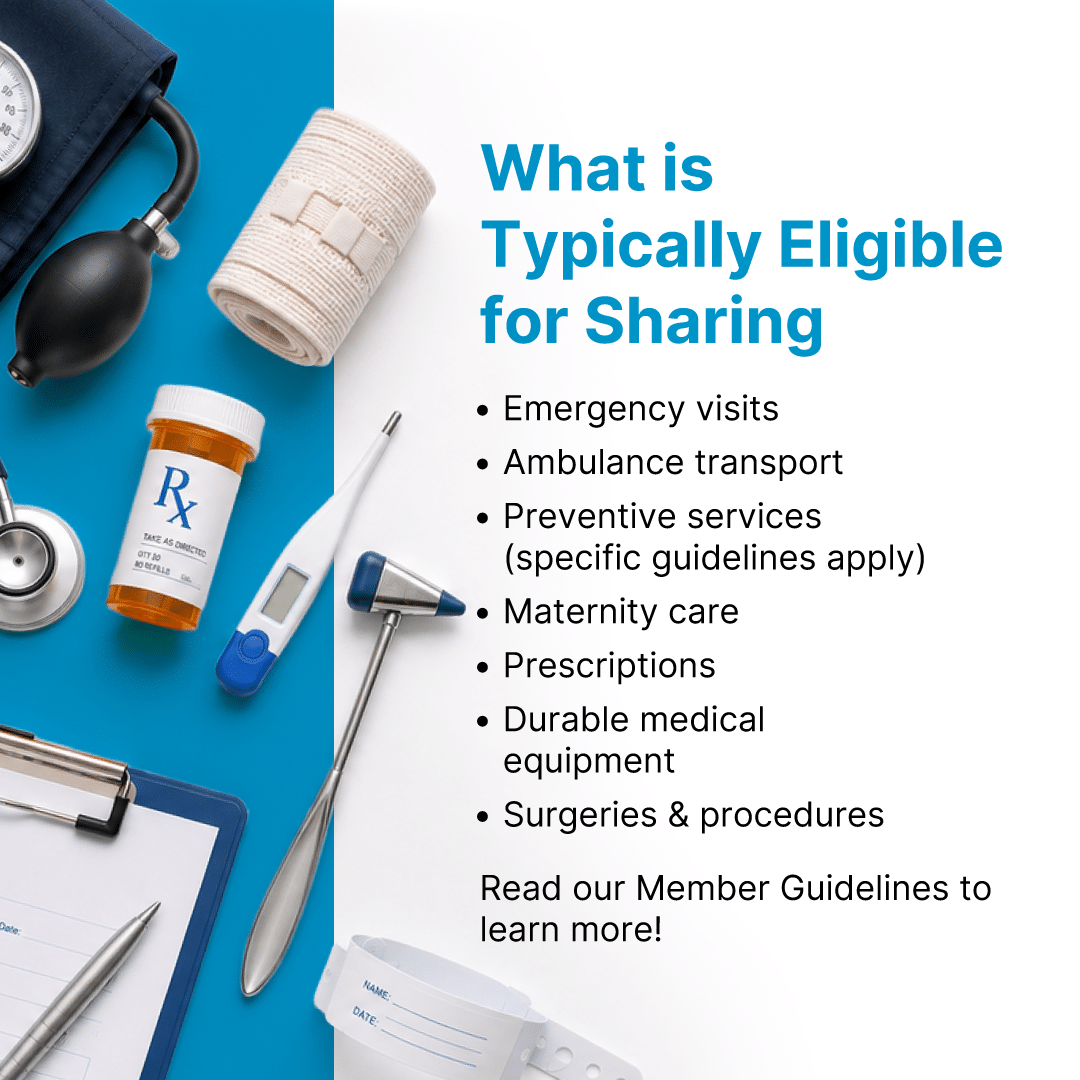
Many common medical expenses may be eligible for sharing when they are connected to a qualifying medical need and submitted through the sharing request process.
This can include emergency visits, ambulance transport related to an eligible illness or injury, surgeries and procedures, certain preventive services, and maternity sharing requests that meet Zion HealthShare’s maternity guidelines.
Some prescriptions, durable medical equipment, therapeutic treatments, hospice care, home healthcare, skilled nursing, and medical supplies may also be eligible when they are connected to an eligible sharing request.
What Medical Expenses Are Generally Not Eligible for Sharing?
Some expenses are generally not eligible for sharing, even if they are related to a member’s health or wellness.
These can include: dental services, fertility evaluations and treatments, elective sterilization, genetic screenings or counseling, hearing aids, sleep apnea equipment and testing, vitamins and supplements, and subscriptions such as Direct Primary Care, gym, chiropractor, or similar memberships.
A few categories have important details to understand. Vision hardware such as glasses and contacts is generally not eligible for sharing. Fees, interest, taxes, or late payment charges on medical bills are considered member responsibility. Certain mental health and neurodivergent-related expenses are also listed as ineligible for sharing.
If you already know you may need a specific type of care, treatment, or service, it is worth checking that section of the Member Guidelines before joining.
A Simple Look at Common Sharing Categories
This table gives a high-level view of common categories, including expenses often considered for sharing and those that are generally not eligible.
What Is the Initial Unshareable Amount?
The Initial Unshareable Amount, or IUA, is the member’s responsibility for a medical need before additional eligible expenses may be considered for sharing.
Zion HealthShare offers three IUA options: $1,250, $2,500, and $5,000. Once the IUA is met for a qualifying medical need, remaining eligible expenses connected to that same need may be shared by the community.
Some categories have specific sharing limits, and maternity sharing requests follow their own IUA structure. Household memberships are also not responsible for more than three IUAs in a rolling 12-month period.
How Pre-Membership Medical Conditions Work
Zion HealthShare uses the term pre-membership medical condition for certain health conditions that existed before a person’s membership start date.
In general, this can include a condition that was examined, diagnosed, treated, medicated, symptomatic, or otherwise present within the 24 months before membership began. These conditions may still be considered for sharing, but they follow a phase-in period.
During the first year of membership, expenses related to pre-membership medical conditions are not eligible for sharing. After that, eligible expenses may be shared up to certain limits that increase by membership year.
There are also specific exceptions. High blood pressure, high cholesterol, and diabetes may not be treated as pre-membership medical conditions when they are controlled through medication or diet and have not required hospitalization in the 12 months before joining.
Can Zion HealthShare Members Choose Their Own Provider?
One reason people consider health sharing is the ability to choose their own licensed provider.
With Zion HealthShare, members are not limited by traditional network restrictions. Let’s say you need a nonemergency procedure. You can contact different licensed providers, ask about self-pay pricing, and compare options before deciding where to receive care.
If you do not have insurance through another source, you may present as a self-pay patient. It helps to keep itemized bills, receipts, and related documentation so you have what you need for a sharing request.
For planned, nonemergency care, members can contact the Zion HealthShare Member Advocate team before treatment to discuss the sharing process and payment at the time of service.
Frequently Asked Questions About Zion HealthShare Guidelines
- Does Zion HealthShare cover medical expenses? Zion HealthShare is not insurance, so it does not "cover" medical expenses. Instead, certain medical expenses may be eligible for sharing when they meet the requirements outlined in the Member Guidelines.
- What does "eligible for sharing" mean? It means a medical expense may be shared by the Zion HealthShare community if it meets the Member Guidelines and receives a final eligibility determination.
- Where can I find the full Zion HealthShare guidelines? The complete Pautas de Membresía are available on the Zion HealthShare website. Reviewing them is the best way to understand what medical expenses may be eligible for sharing, along with any limitations or requirements that may apply.
Know What to Expect Before You Join
Understanding the Zion HealthShare guidelines can help you make a more informed decision before joining. They give you a clearer view of what may be eligible for sharing, what members are responsible for, and where limits or waiting periods may apply. If you are still learning how health sharing works, it may also help to read more about how to decide if it is right for you. If Zion HealthShare seems like a fit for how you want to approach medical costs, you can explore membership options and review the full Pautas de Membresía before signing up.

ABOUT THE AUTHOR
Lindsey Tague
Lindsey Tague is a content strategist and writer with experience across healthcare, EdTech, and L&D. She’s passionate about creating educational content for industries that help people learn, grow, better understand their options and make more informed decisions. As a digital nomad, she often writes from cafés abroad and, when she’s offline, is usually exploring a new city or hiking somewhere with a good view.
Vigente desde: October 17, 2026
Zion HealthShare operates as a non-profit medical cost-sharing community. We are not insurance and cannot operate in the state of Washington. Please visit our website for state notices.